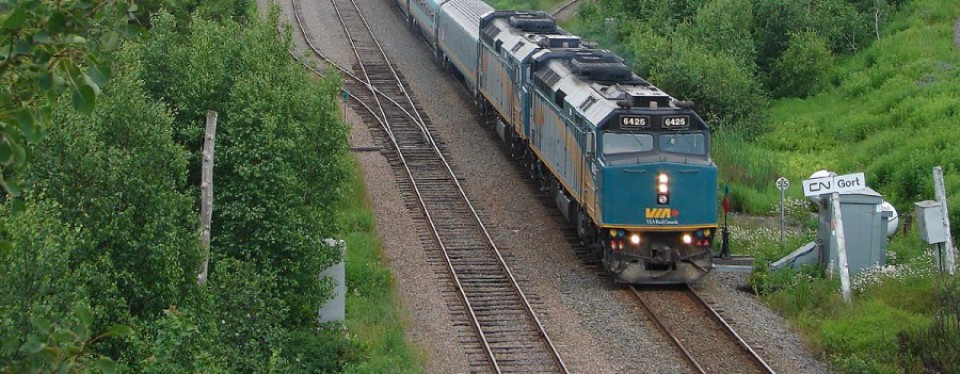
A rail aficionado’s reflections on what we once had – but have lost
-by Ted Bartlett

It’s perhaps no coincidence that VIA Rail Canada is a year late in observing the 120th anniversary of North America’s longest running named train. Its on-time performance hasn’t exactly been something the Crown corporation can point to with pride, and the tri-weekly Halifax-Montreal Ocean has been one of its worst performing trains in recent years. It’s not unusual for it to arrive at destination four hours or more behind schedule.
While we don’t wish to rain too heavily on VIA’s parade, it seems timely to inject a little reality into the events being held in Halifax to mark the occasion. Perhaps it’s simply an effort to remind the public that some semblance of passenger rail still exists in the Maritimes, because, apart from some online promotion, VIA hasn’t spent a cent to advertise the service in years.
The Ocean Limited, as it was originally known, made its inaugural run in July of 1904, and was from day one the pride of the Intercolonial Railway. After the Intercolonial was absorbed by the new Crown corporation Canadian National Railways in 1919, this train continued its position of preeminence, and was equipped with the newest and finest locomotives and rolling stock. Today, sadly, it’s but a shadow of its former self, and the abysmal on-time performance is just one of its many shortcomings.

Arguably, the finest hour for the Ocean came in the mid-1990s – the devastating cuts VIA had endured in 1990 at the hands of the Mulroney Government notwithstanding. The train only ran six days a week instead of seven – still double the frequency offered today – but the onboard amenities were outstanding and time keeping and bus connections to points not served by rail remained quite acceptable.
The company was completing a comprehensive refurbishment of the classic stainless steel cars it had inherited from Canadian Pacific, and sufficient rolling stock was devoted to the Maritime service for three train sets. This equipment had been manufactured in 1954 by the now-defunct Budd Company of Philadelphia – and had been built to last. It included coaches, Pullman-style sleeping cars, diners, and two versions of the iconic scenic dome observation cars. It was rebuilt literally from the wheels up, which included running gear; new electric heating and air conditioning systems powered by the locomotives, known as head-end power (HEP); windows, upholstery, and interior décor upgrades. The updated motive power was F40PH units, built in the 1980s by General Motors Diesel in London, Ontario.

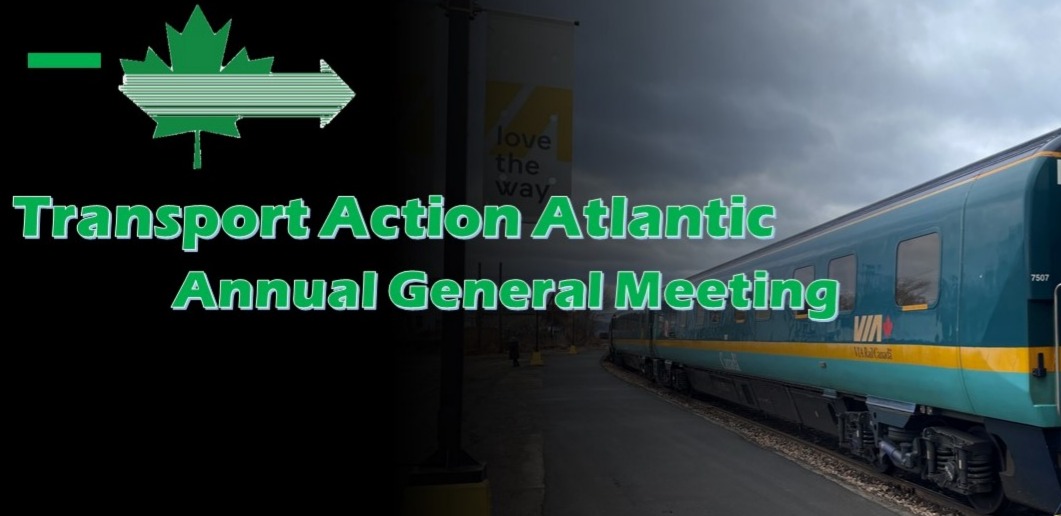
Viewed from trackside, the re-equipped Ocean was an object of beauty, resplendent in its new silver-and-blue livery. Onboard, the painstakingly restored dining cars offered appetizing meals freshly prepared by a VIA chef. Passengers could enjoy the view from not just one, but two scenic dome observation cars – one exclusively for sleeper-class passengers and the other shared with economy class.

The timetable in effect for the summer of 1995 showed what is believed to be the fastest westbound scheduled running time ever, at 19 hours and 15 minutes, with a 2:00 pm departure from Halifax and 8:15 am arrival in Montreal. There were convenient rail connections for onward-bound passengers to destinations such as Toronto, Ottawa, Kingston, London and Windsor, and reliable bus connections were offered between the Ocean and major Maritime centres like Sydney, Saint John, Fredericton and Charlottetown, as well as to the Newfoundland ferry. And in those far-off days, on-time performance was still pretty acceptable.
At first the decline from this proud pinnacle was barely perceptible. In the fall of 1995 the connecting bus between Miramichi and Fredericton disappeared from the timetable. In later years, Economy-class passengers would find that the blankets and pillows advertised when the newly-refurbished equipment was launched were no longer available. Eventually they found themselves no longer welcome in the dining car.
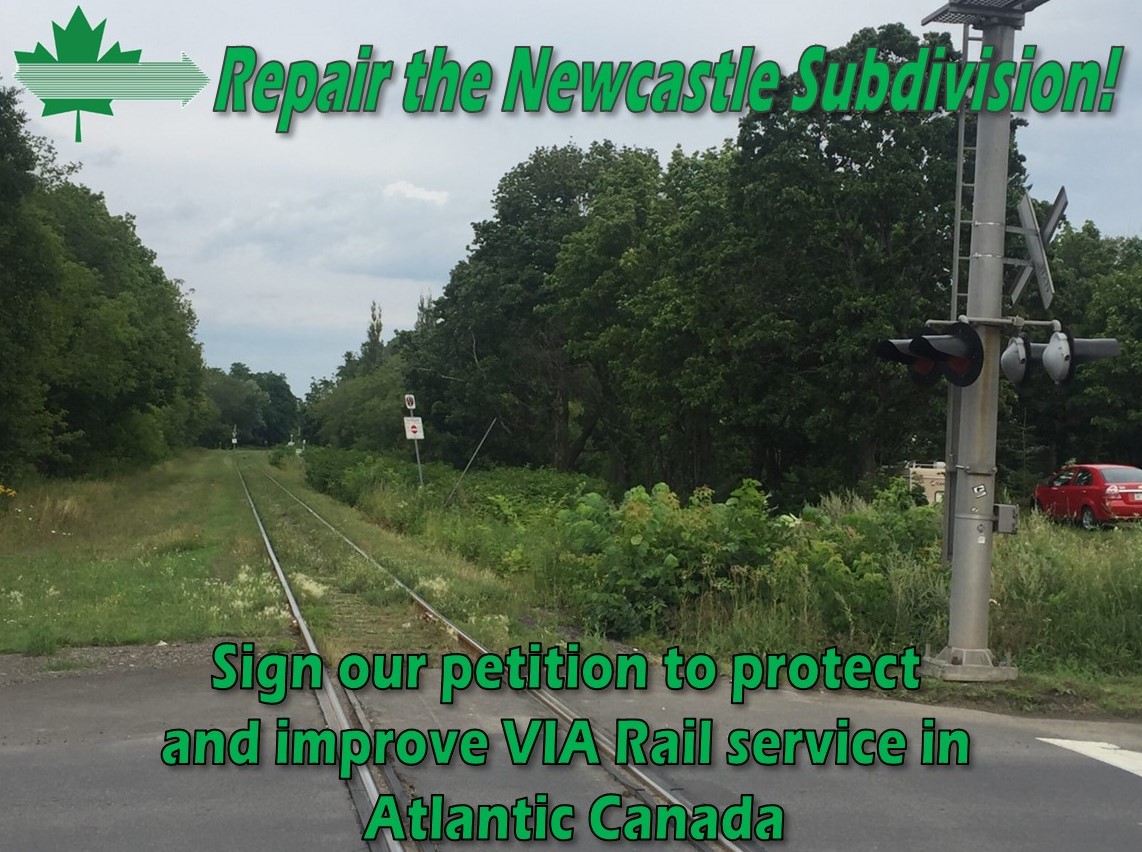
But perhaps the most significant change involved the infrastructure the Ocean used on its route through northern New Brunswick. Slowly but inexorably, the effects of deferred track maintenance by the shortline operator that had acquired that part of the former Intercolonial line from Canadian National became apparent. Schedules were lengthened as maximum allowable running speeds were scaled back. By 2015 almost the entire 66 miles (106 km) between Rogersville and Bathurst was restricted to a maximum speed of 30 miles per hour. Except for yard limits and slow orders on a few bridges, in 1995 passenger trains could safely run between 65 and 75 mph on most of that trackage. By now the Ocean’s total scheduled running time from Halifax to Montreal had been lengthened by more than three hours from what it had been 20 years previously. And it’s only gotten worse since CN reacquired the line a decade after divesting it. Since 2015 an additional 90 minutes has been added to the westbound schedule, and still the train is usually late arriving in Montreal.
Another substantial change for the Ocean involved rolling stock. By 2006 the ”silver and blue” stainless steel equipment had mostly been redeployed elsewhere in VIA’s system. Its replacement on the Maritime train was a collection of British-built cars that had been originally designed for a planned overnight service between the UK and the continent. That project had been abandoned when the arrival of the high-speed daytime Eurostar using the same Channel Tunnel route, coupled with cheap fares on no-frills airlines, put its commercial viability into question. Offered the opportunity to buy the now-unwanted equipment at a fire-sale price, VIA purchased all 139 cars – more than half of them incomplete shells – in 2001. They named the cars “Renaissance”, as a suggestion of progress.
Whether they actually represented a forward step was open to question. They certainly presented technical challenges, as their coupling and braking systems were not compatible with North American standards. However VIA was able to work around those issues for the most part. Being built for service in Britain and France, they were also ill-suited to the rigors of the Canadian winter; frozen plumbing was a frequent occurrence. And because of the restrictive clearances of the Channel Tunnel, they were lower and narrower than North American cars, resulting in a less spacious interior and a general feeling of being cramped.
Renaissance coaches did offer wide comfortable seating and a smoother, quieter ride, but the sleeping car compartments were another story. The service for which the cars were originally intended would have had passengers boarding just before bedtime, with arrival early the next morning. There was little or no consideration given to daytime seating comfort, which was quite important in the Ocean business model.
There were no dining cars in the Renaissance collection, so VIA had three of the sleeper shells converted for that purpose. However, there was no onboard galley, so all meals were prepared by an outside caterer, loaded aboard in airline fashion, and plated and served by train staff. It was certainly a far cry from the freshly prepared entrees that had been a hallmark of the Ocean for generations. VIA did manage to retain the domed observation car at the end of the train by using a so-called “transition car” with a European coupler at one end and a North American one at the other. It was a bit of a lash-up, and looked somewhat incongruous, but it worked.
In retrospect, the Renaissance purchase was no bargain. The cars were not built with longevity in mind, a factor perhaps exacerbated by the Canadian operating environment. In addition to the Ocean, some trainsets ran in corridor service for a number of years, but all these had been retired by mid-2024. A large number of the uncompleted cars were cannibalized for parts to keep others running; many were scrapped without ever carrying a passenger.
In 2012 came another setback. A less-than-visionary CEO at VIA decided there was money to be saved by cutting the Ocean back to three times a week. Efforts to convince him otherwise were futile. The expected savings – as many had predicted – proved to be an illusion, because revenues were considerably reduced while fixed costs remained the same, and the train became a far less useful option to the travelling public.
The COVID-19 pandemic was yet one more blow. In March 2020 VIA abruptly cancelled the Ocean, which did not operate at all for more than a year. When the train returned in August 2021 it ran only once a week in each direction. The full tri-weekly schedule wasn’t restored until June of 2022. But during the service interruption CN and the Port of Halifax decommissioned the reversing loop at the container terminal adjacent to the VIA station, which had allowed the train to be turned for the westbound journey. There was then no alternative but to run the locomotives around the train and have the cars go backwards all the way to Montreal. That was the end of the observation dome, leaving only a Renaissance service car with about a dozen rather crowded and somewhat uncomfortable seats for the use of sleeper class passengers.

The Ocean as it exists today is not really a pretty sight. So is it worth celebrating? Yes, indeed! If nothing else, marking this anniversary – albeit a little late – is an opportunity to build awareness of an outstanding service we once had, and the potential to bring it back to some semblance of its former glory, if only the political will were there to do it.
Transport Action Atlantic, an all-volunteer organization, has been the leading voice for public transportation advocacy in our region for half a century. We have a three-stage vision that could realistically and affordably significantly improve VIA service in a short-term – without waiting 10 years or more for the new long-haul passenger equipment that the Trudeau Government promised in 2024. (Bear in mind that this stuff hasn’t even been designed yet – let alone ordered. It exists only in conceptual form.)
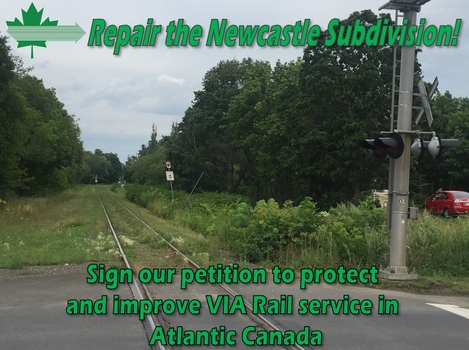
- The first priority is to repair and maintain the former Intercolonial line through northern New Brunswick to the passenger operational standards that existed three decades ago, allowing a return to the faster track speeds and shorter journey times of the Ocean’s heyday as recently as the 1990s. It’s quite clear that the investor-owned CN sees no shareholder value in doing this, so the obvious answer is for the Government of Canada to take the initiative. It would be a nation-rebuilding undertaking – not quite a megaproject with a billion-dollar price tag, but an affordable and achievable investment that could be completed with minimum delay and positive measurable outcomes. To put it in perspective, it has been estimated the total cost would be less than that of twinning 10 kilometres of existing highway.
- To improve the value proposition of the train, convenient and reliable motorcoach connections must be restored to and from destinations not directly served by rail, including Saint John, Fredericton, Charlottetown, Sydney and the Newfoundland ferry. TAA recommends that these be run by private operators, but with a guarantee that they would not lose money on the service.
- TAA has long maintained that a through daily train between Halifax and Montreal is the minimum acceptable level of service. The delivery of new Venture trains for VIA’s corridor routes, expected to be completed later this year, will release a group of still-serviceable stainless steel cars for use elsewhere in the country. There are also a number of sleeping, dining and skyline dome cars currently awaiting refurbishment. It should not be an insurmountable obstacle to assemble sufficient equipment for the third train set needed to restore daily service. It should not be necessary for the Ocean to wait long years for new cars to be designed and built to regain some of its former glory.
The key phrase is political will. Transport Action Atlantic believes all three goals can be achieved in the near future if Canada’s new government wishes to do it. The 120th (121st?) anniversary of the Ocean seems like a good time to start the wheels turning!