
“Go Maritimes” provides useful tool for multi-modal transportation planning in Atlantic Canada

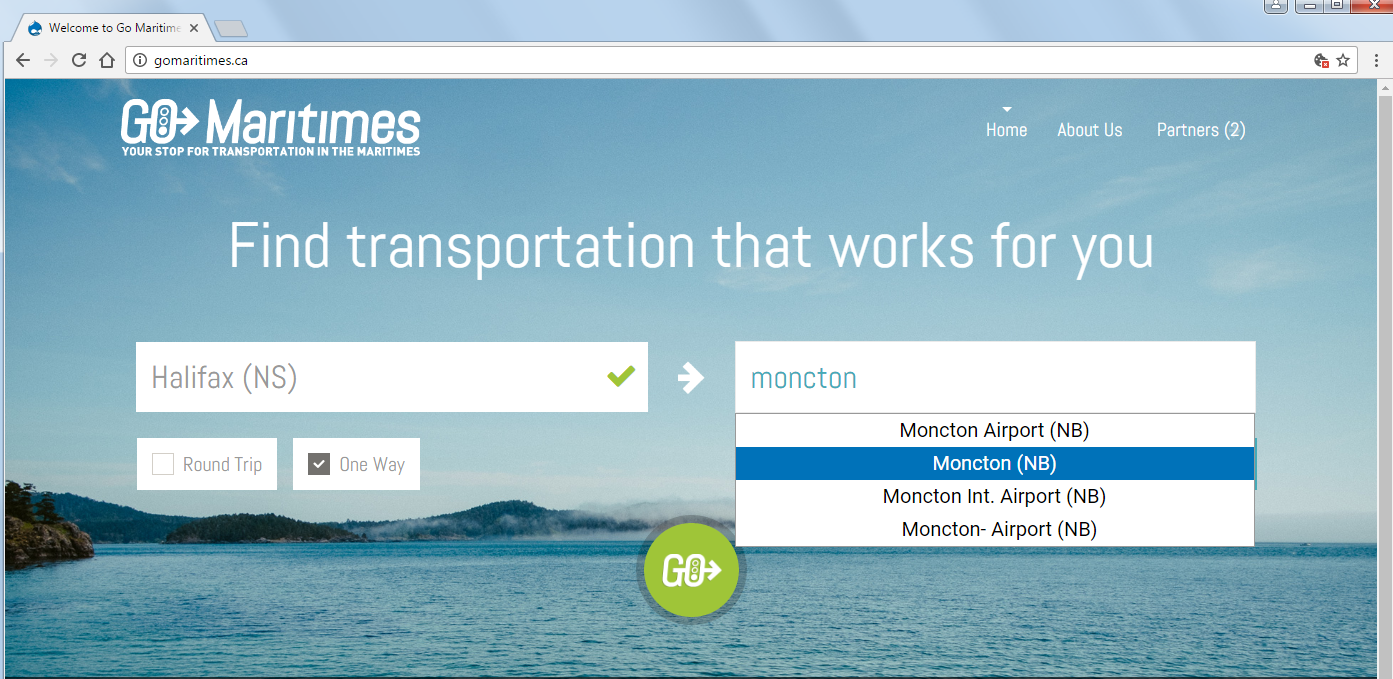
Screenshot of the Go Maritimes website, with menus to enter travel end points, date, and search options.
A look at the Go Maritimes website. This tool makes it easy to see all of your various public transportation options for trips within the Maritimes.

Have you ever been trying to figure out how to use public transportation to travel between two places in the Maritimes, and had a hard time knowing if you’d found all of the options? If so, you’d do well to check out the valuable online transportation planning resource that is now available in the form of “Go Maritimes”. Founded by Wayne Groszko and developed in partnership with a number of individuals and local organizations (including the Ecology Action Centre, Dalhousie University, and the Province of Nova Scotia) Go Maritimes aims to make it easier for people to find the schedules for buses, shuttles, trains and other transport services to plan their travel in Canada’s Maritime provinces.

Trying to plan travel using public transportation in many parts of the Maritimes can be a challenge, and that often begins with simply being unaware of what options exist. With Go Martimes, users can enter any two end point destinations (where public transportation options exist) in the Maritime provinces and their desired travel date, and the site will then present them with the various options available, including specific schedules and estimated costs. Continue reading ““Go Maritimes” provides useful tool for multi-modal transportation planning in Atlantic Canada”

Fewer trains, higher cost – VIA’s Tri-weekly Ocean continues to cost more than 6 day/week service

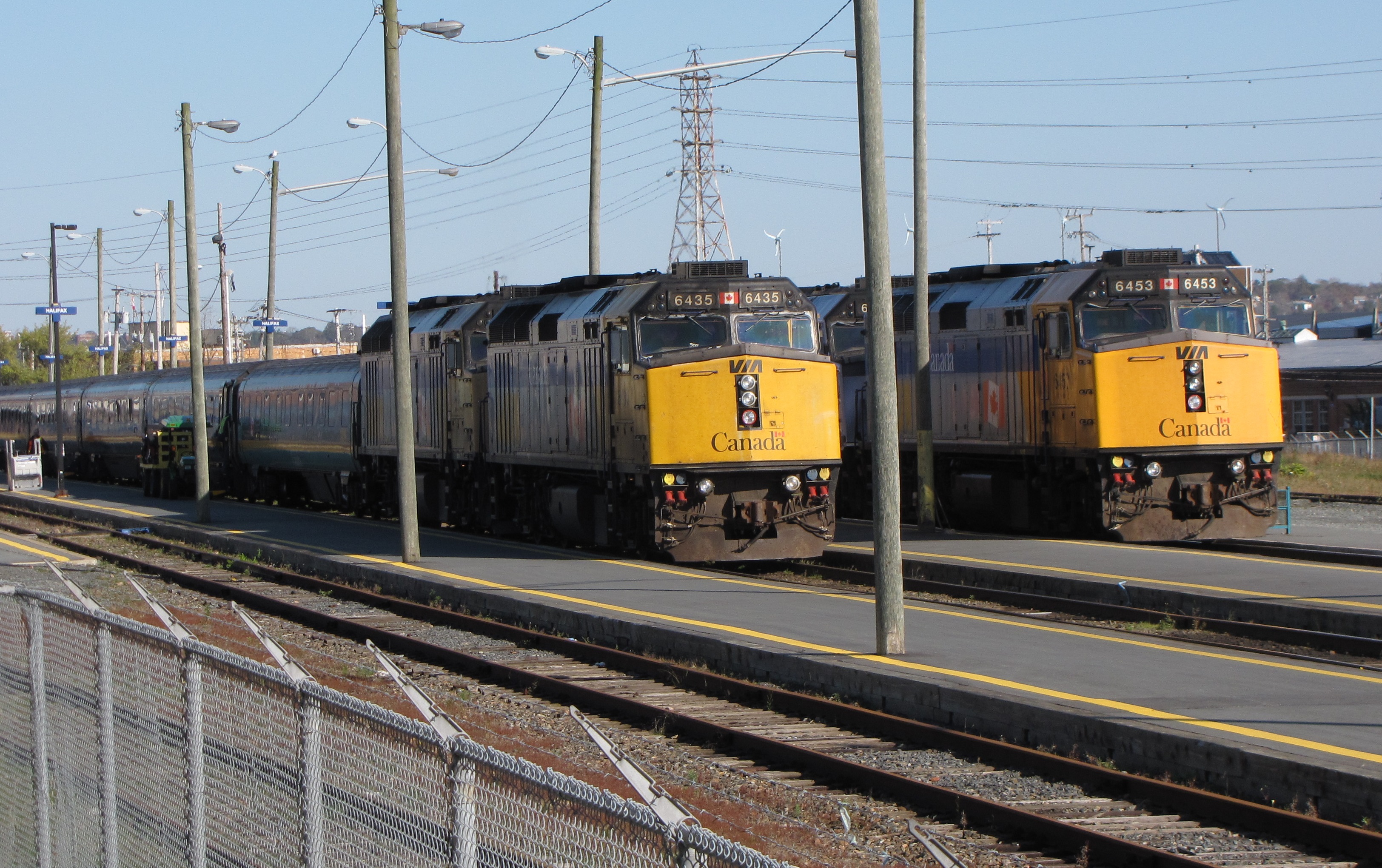
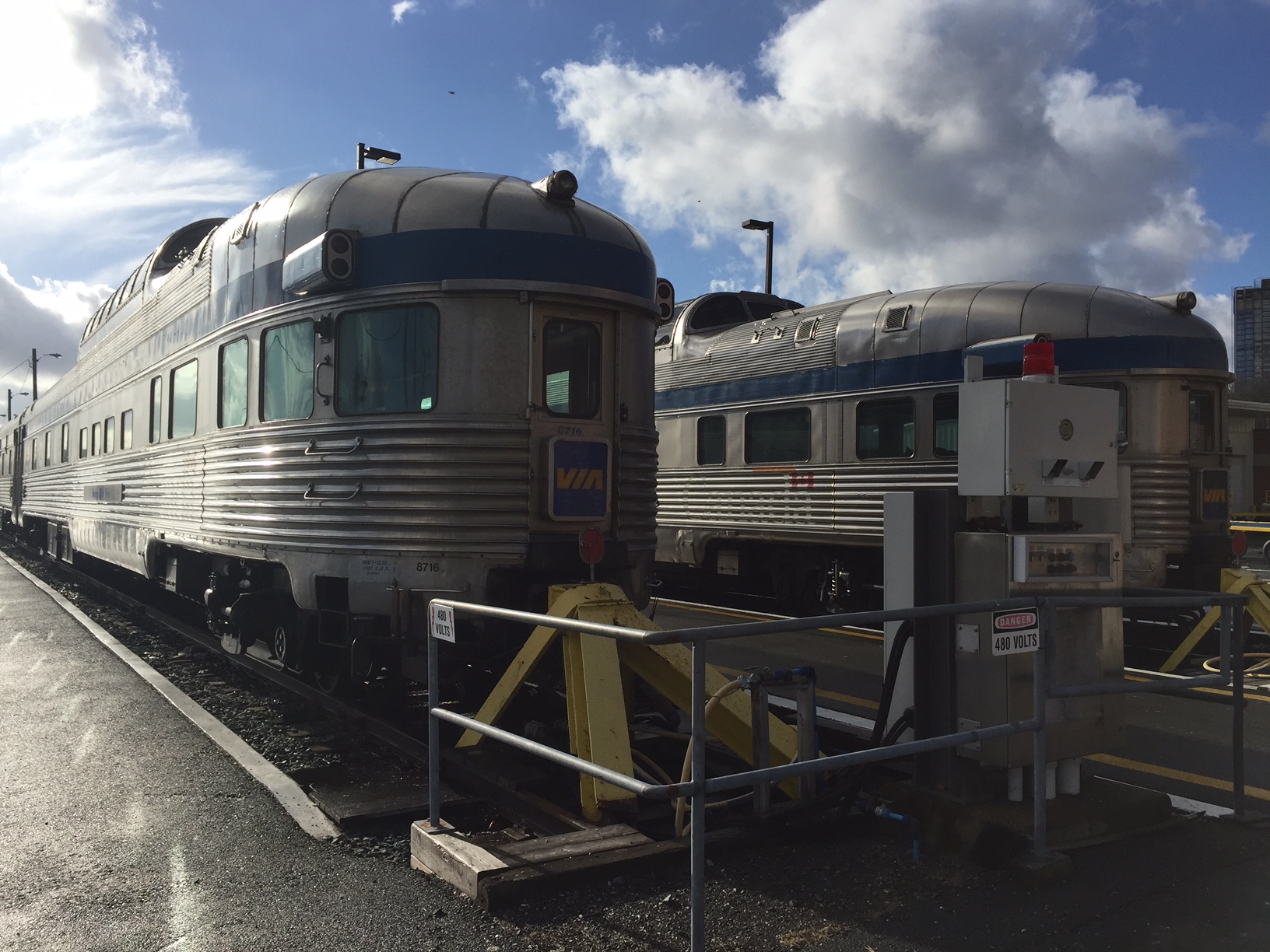
Two yellow VIA Rail trains sit on tracks next to each other at the Halifax station on a sunny day.
Two Ocean train sets sit in Halifax on a sunny day about a year before the 2012 service cut. This is now a rare sight, only occurring when VIA runs extra trains over the holiday season. (Tim Hayman photo)

When VIA Rail cut service on the Montreal-Halifax Ocean in half back near the end of 2012, they claimed that the move was made to reduce the cost of running the service. The Ocean, like all of VIA’s services (and indeed, nearly all public transportation systems worldwide), operates at a net “loss”, with subsidies required to offset the operating costs of the service. Trains like the Ocean require a somewhat higher subsidy per passenger than VIA’s Corridor services, and VIA management was supposedly looking for ways to reduce spending across the system. So the Ocean was reduced from 6 day per week operation to only 3.

Passenger rail advocates, including Transport Action Atlantic, raised their voices at the time to warn of the implications of slashing the service. Examples from Canada and elsewhere in the world continue to show that frequency reductions are not an effective means of reducing costs – while they may result in some immediate cost savings, any cost reductions are offset almost without fail by greater reductions in ridership as a result of the less convenient service.

The problem with reduced frequency is that costs don’t come down enough, while revenues plummet. Reducing a service like the Ocean to a lower frequency does reduce some costs, but not all of them, as many fixed costs remain (e.g. maintenance of stations and other infrastructure, equipment costs, some personnel costs, marketing). In other words, a 50% reduction in train frequency does not result in a 50% reduction in costs. VIA’s numbers since 2012 back this up: in 2011, the Ocean cost $48,832,000 to operate 6 days per week. In 2013, that cost was reduced to $43,930,000 for 3 trains per week – a reduction of barely 10%.

Continue reading “Fewer trains, higher cost – VIA’s Tri-weekly Ocean continues to cost more than 6 day/week service”

A muted celebration of National Railway Day

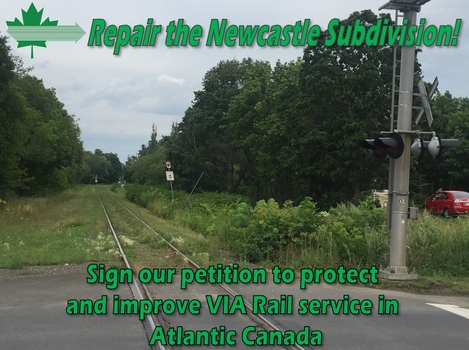
A railway track disappears to the horizon amidst a forest
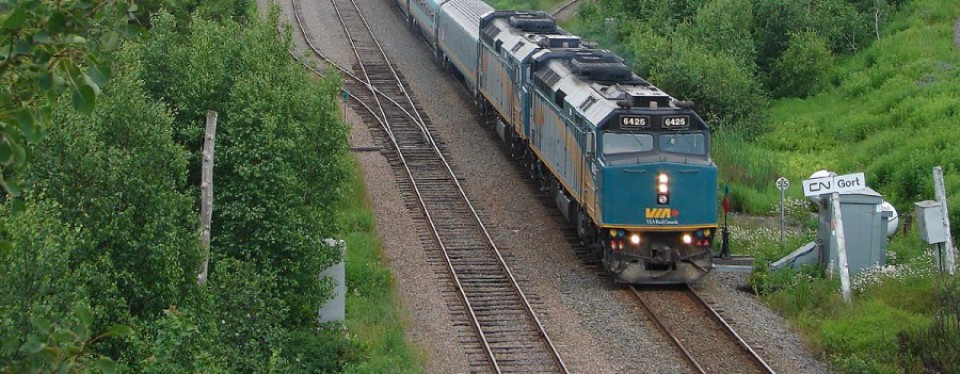
On CN’s Newcastle Sub just north of Rogersville NB, a speed restriction slows VIA Rail’s Ocean to an agonizing 30 miles per hour over more than 60 miles of deteriorated track. It’s not something to celebrate on National Railway Day!

Transport Action Atlantic’s observance of National Railway Day is somewhat less than celebratory this year.  Our optimism that the Trudeau Government would act decisively to address some of Canada’s critical rail issues is beginning to fade, amid growing concern about the state of the network in the Maritimes and across Canada.

November 7 marks the anniversary of the last spike ceremony that marked completion of a continuous rail link from coast to coast in 1885. More than 130 years after that historic event, what’s often referred to as the National Dream remains an essential part of the Canadian economy.  But despite the vital importance of rail in moving goods and people from coast to coast, TAA insists there are some very serious issues that need to be addressed. So far they appear to be getting short shrift from a government that took office just over a year ago on a promise of “real change.”

The federal government appears to have a renewed focus on the subject of rail safety – and rightly so. But there’s also a critical infrastructure shortfall that is still not getting the attention it so badly needs. Last Thursday’s major policy speech in Montreal by Transport Minister Marc Garneau had very little to say about it. Continue reading “A muted celebration of National Railway Day”