

Atlantic Transport News – August 2021

Welcome to the August edition of Atlantic Transport News!

Here’s a look at what you’ll find in this edition:

NOVA SCOTIA ELECTION APPROACHES, PARTIES WEIGH IN ON TRANSPORTATION ISSUES

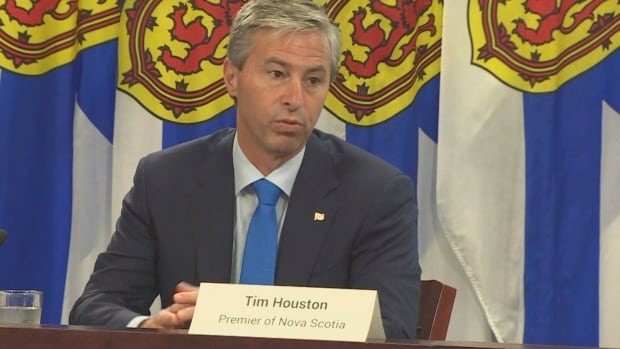
Polling day in Nova Scotia is fast approaching, and each of the parties continue to lay out their vision for the province should they have the opportunity to form government. As we have done consistently with other recent provincial elections throughout the region, TAA believes that it is important – and reasonable – to ask candidates of all political persuasion where they stand on the transportation issues we believe are important to the province and its future.

Earlier in the campaign, TAA submitted a series of six questions on key transportation issues to each of the major parties running in the election. Our goal has been to provide each of the parties with an opportunity to present their plan to our members and to anyone in the public who is concerned about these issues.

To date, we have received responses from the Nova Scotia NDP, Nova Scotia Liberal party, and the Green Party of NS. We have posted these responses in their entirety on our website, in the order that they were received. If we receive a response from the Progressive Conservative party before the election, we will add it to our post. Of course each party also has published platform documents, which we would encourage Nova Scotians to peruse for further information and context as they consider their vote.

You can view the Q&A here: https://transportactionatlantic.ca/ns-election-2021-questions-for-the-parties/

VIA RAIL’S OCEAN RETURNS AFTER 17-MONTH HIATUS

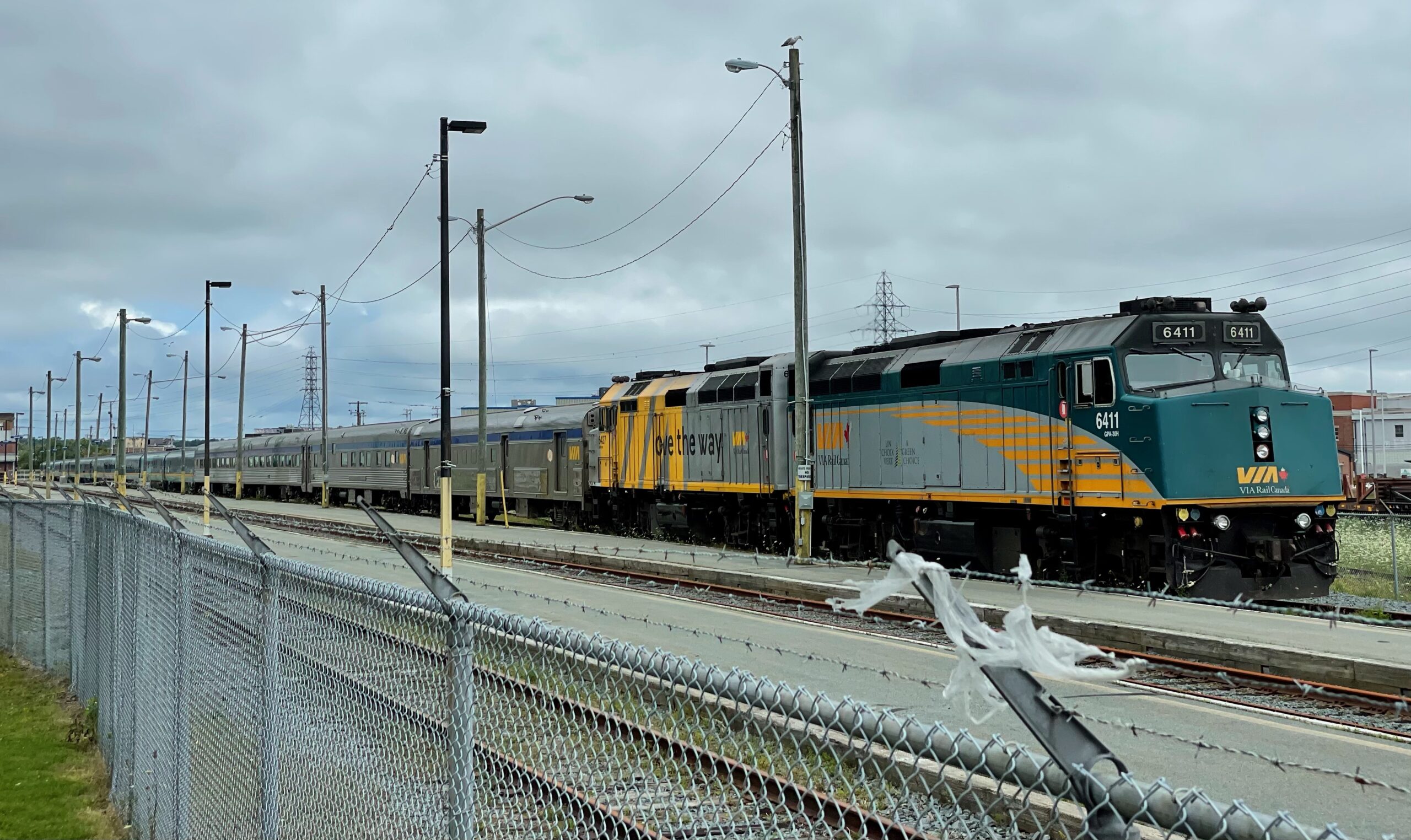
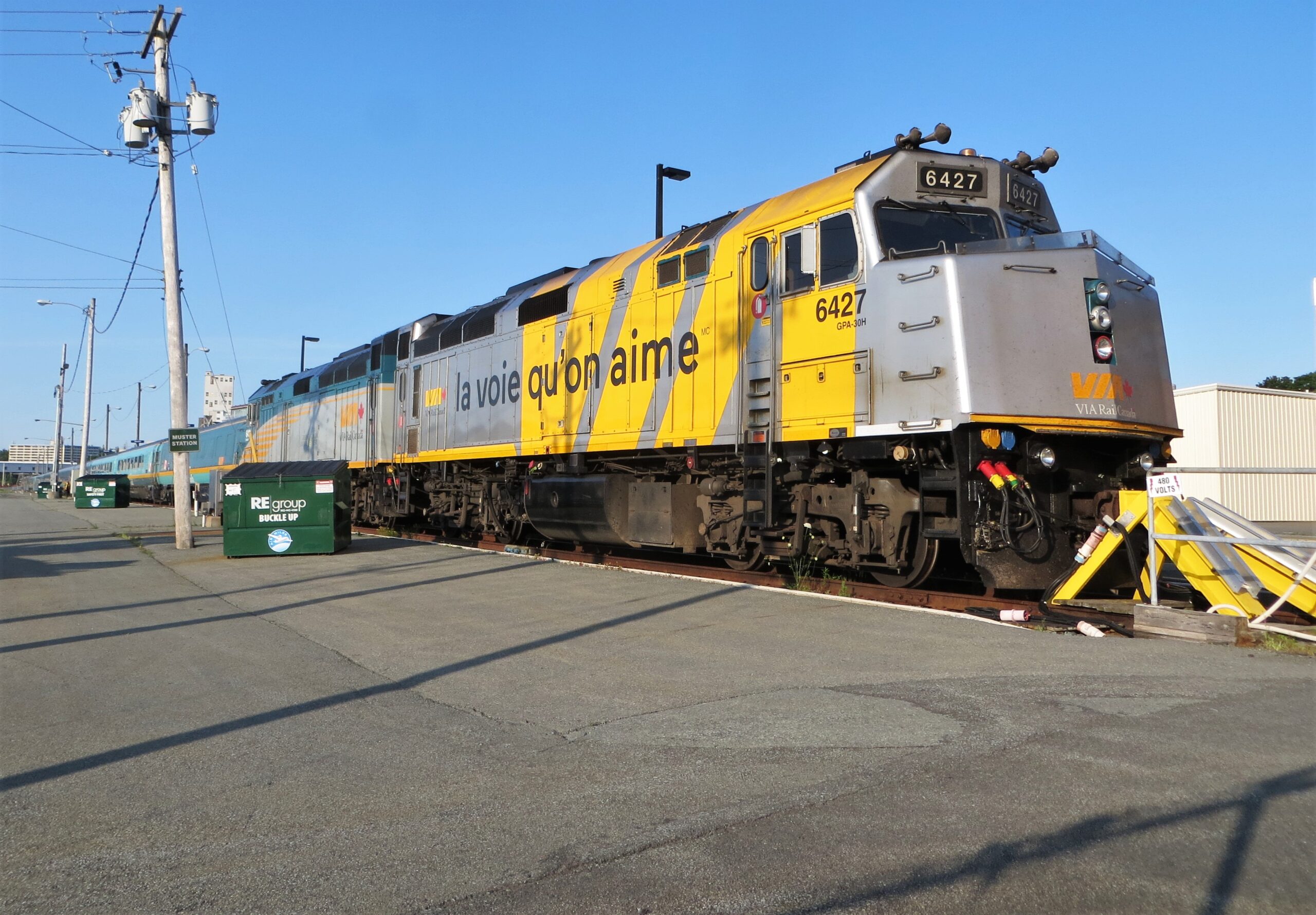
The inaugural return voyage of VIA Train 15 waits to depart Halifax, with the locomotives back-to-back and the new hybrid bidirectional consist in tow (PHOTO – Tim Hayman)

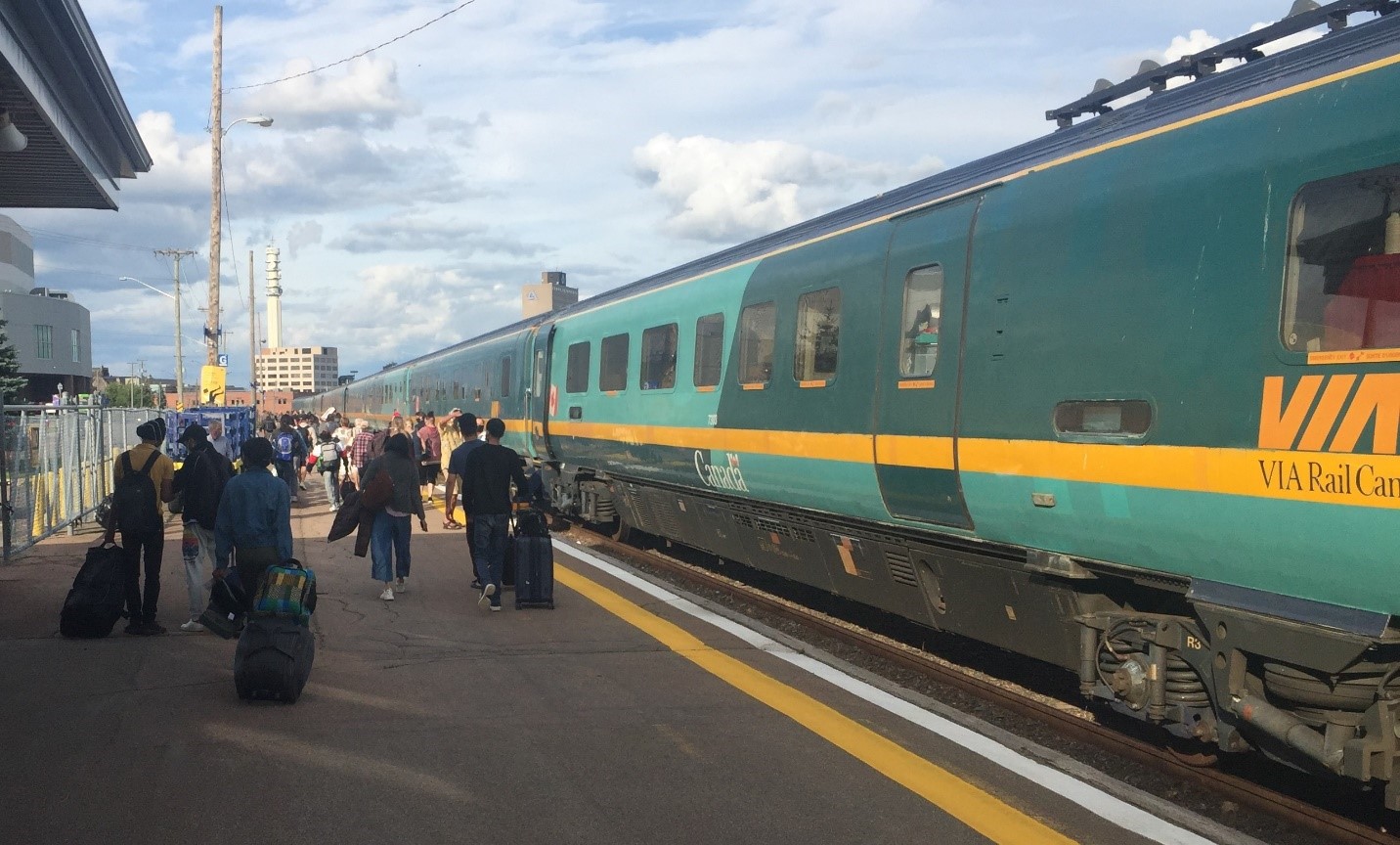
VIA Rail service in Atlantic Canada has resumed at long last, nearly 17 months after the COVID-19 pandemic forced an abrupt shutdown. With the Ocean back in operation between Halifax and Montreal, albeit on a reduced once-per-week schedule, the last major gap in VIA’s network has been restored to at least a basic level of operation. Early indications are that the trains are selling well, and there was a solid crowd boarding the first train in Halifax and at several stops along the way. VIA staff in Moncton had even prepared an impromptu celebratory greeting for this first train, and the Times and Transcript covered the event.

The warm welcome the train received reflects the ongoing interest from citizens along the route in having a train service that is available and that meets their needs for travel both within and beyond the region. While the return is welcome and long overdue, the initial once per week schedule is hardly adequate. We can certainly hope that VIA is serious about it’s talk of a gradual reintroduction of service, and that we will in fact see a return to the pre-pandemic service levels in October as currently indicated by VIA’s reservations system. Of course even this is far from adequate, and TAA continues to make the case for a daily service – but this will require significant investment, and continues to be an item that requires serious support from the federal government to bring to fruition.

The initial on board service offering remains restricted, due to ongoing COVID-19 concerns, with passengers required to wear masks except when eating, drinking, or in private cabins, and both economy and sleeper passengers confined to their respective seats or rooms. Food service is being provided by cart to economy passengers, and sleeping car meals are pre-packaged cold offerings being served to rooms. Despite the presence of dining and Renaissance service/lounge cars in the consist, these are not currently in operation. The timeline to resume fuller service is not clear, though it is of course dependent on the trajectory of the pandemic and related restrictions. With the news today that the federal government will soon be requiring vaccinations for all railway employees and passengers, with implementation expected by the fall, the on board experience may be able to resume some greater normality before too long.

The new bidirectional consist necessitated by the loss of the turning loop in Halifax has indeed resulted in the loss of the Park car. It remains possible that a Skyline dome/lounge could be added in the future, though with it serving no function at the present time where the lounge and dome would be off limits, it’s hardly surprising to see its absence from the initial trains. If no proper replacement for the Park car can be provided, the train will have lost one of its prime attractions for sleeper passengers.

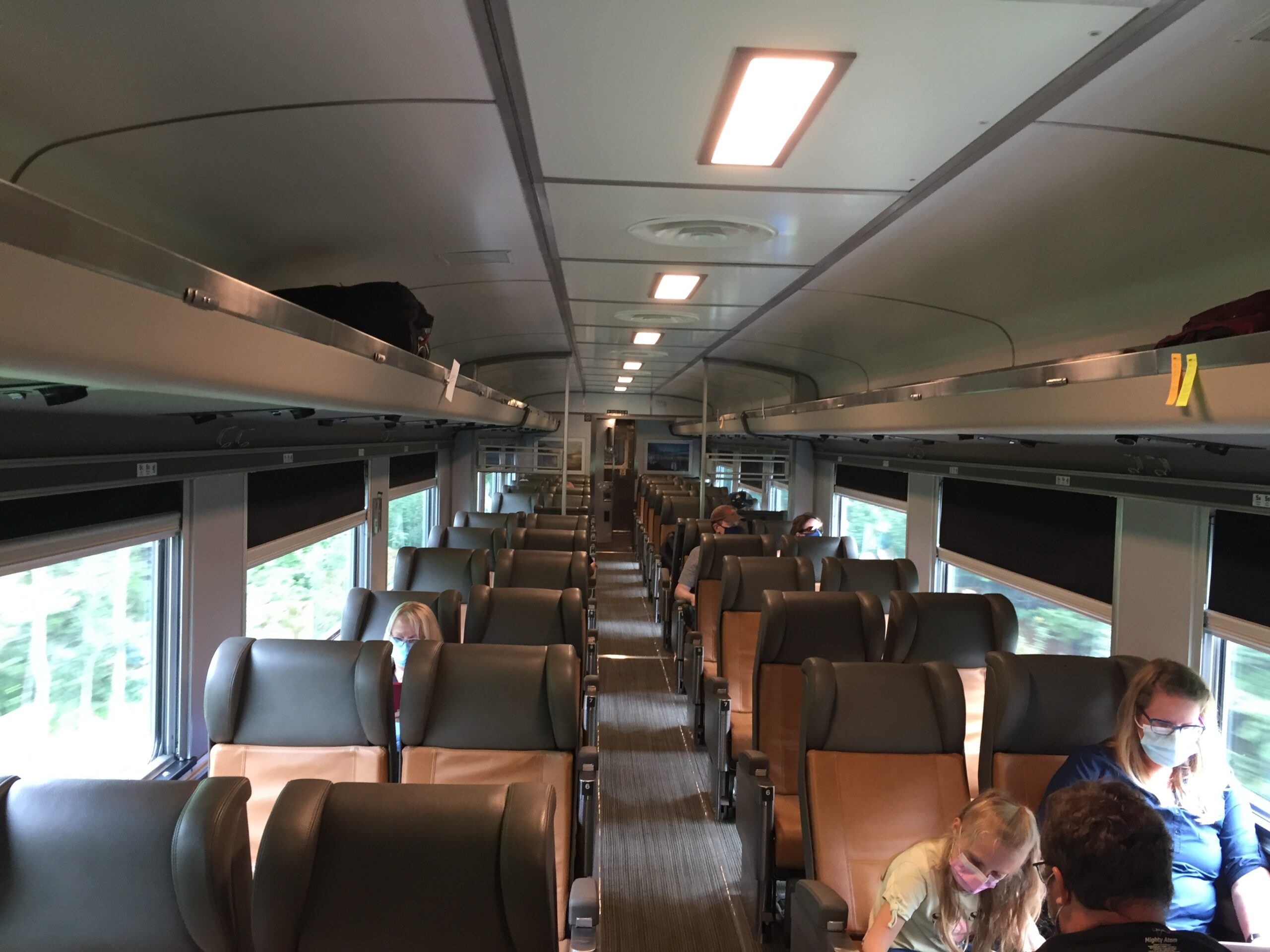
On the bright side, the 1950s built stainless steel HEP1 coaches, last refurbished in the late 1990s, have finally received an overhaul, making for a much nicer on board environment for economy passengers. The Renaissance equipment in use has also seen the most notable refresh in years, with exterior paint touch ups, buffing, and waxing, and interior work to repair upholstery, carpets, and other interior components. These improvements are very much welcome; however, they don’t change the fact that both the HEP and Renaissance equipment, by VIA’s admission, are nearing the end of their serviceable life and a process to replace them needs to start sooner than later. Without adequate replacements, the long term prospects of both the Ocean and Canadian are in serious doubt.

-Tim Hayman

One welcome addition to the current consist is refurbished HEP1 coaches, which offer a spruced up environment for Economy passengers. This upgrade was well overdue, but doesn’t change the fact that both the HEP and Renaissance equipment need replacement plans sooner than later! (PHOTO – Ted Bartlett)

NEW FERRY ON THE WAY FOR MARINE ATLANTIC

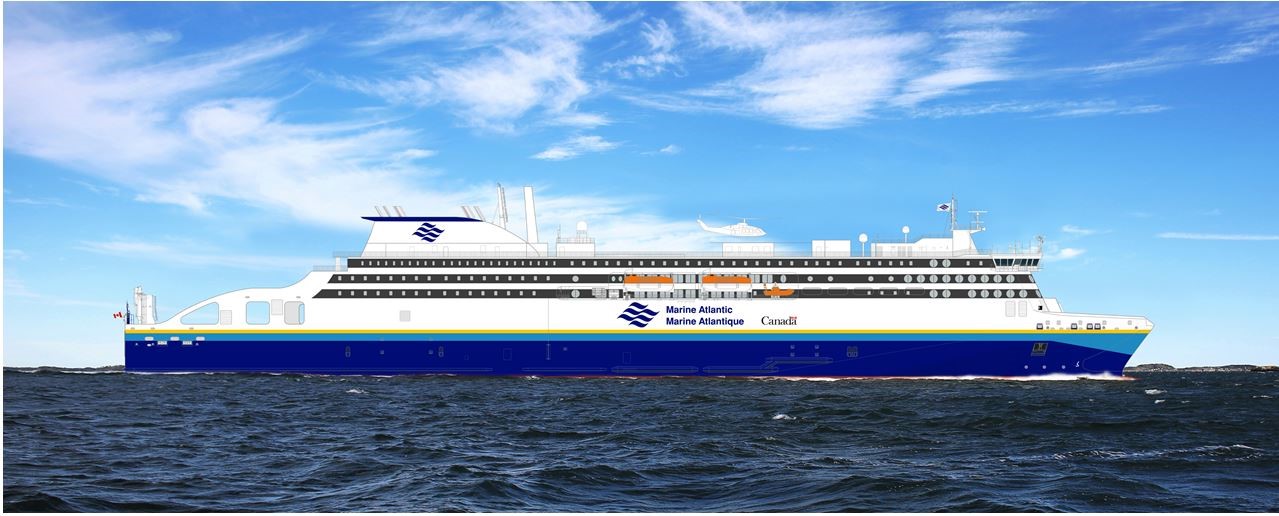
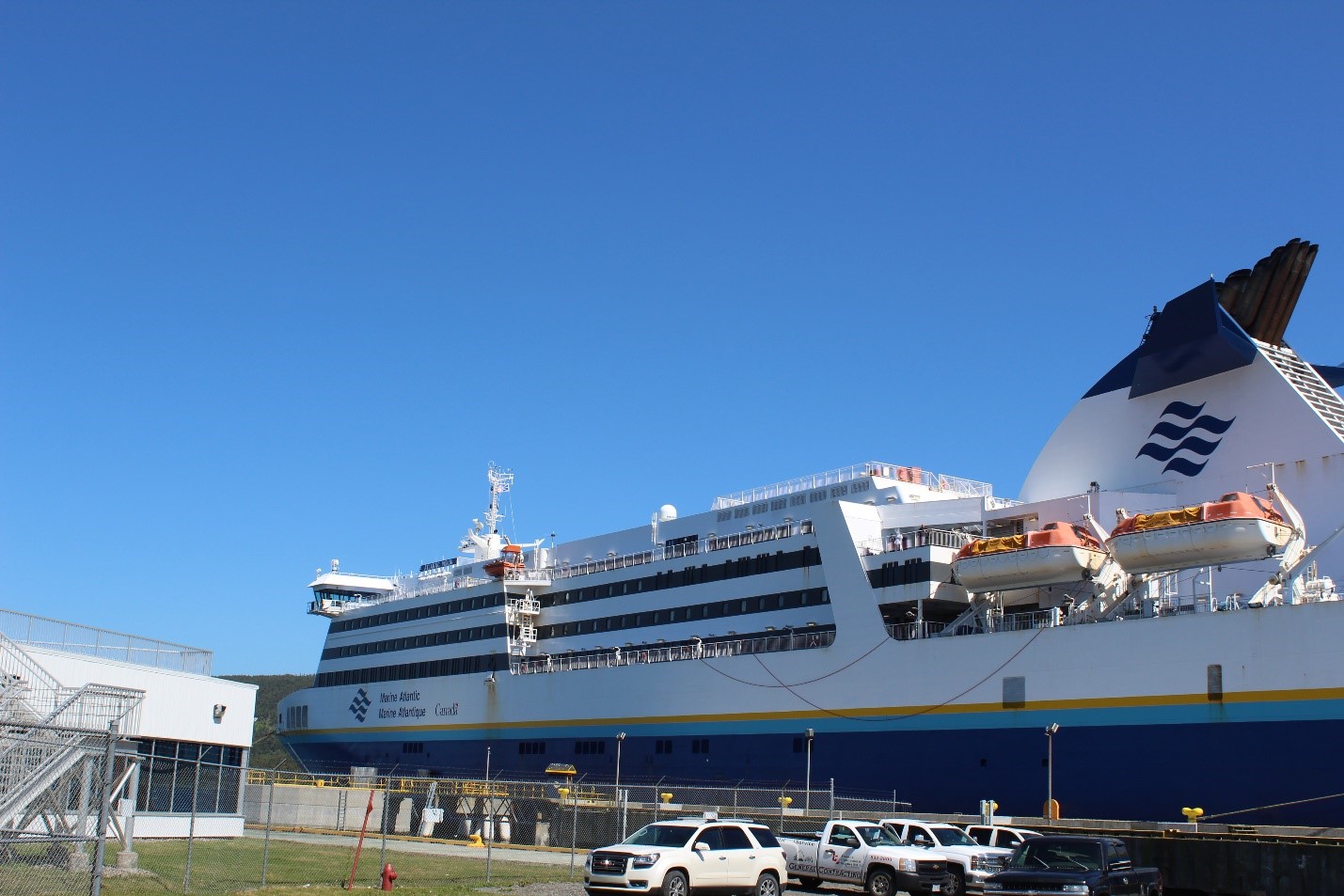
This rendering of the planned new vessel for Marine Atlantic appears to indicate a more esthetically pleasing profile than that of the Crown corporation’s two current workhorses. It’s expected the new ship – as yet unnamed – will replace the aging MV Leif Ericson in 2024. (Image courtesy of Marine Atlantic)

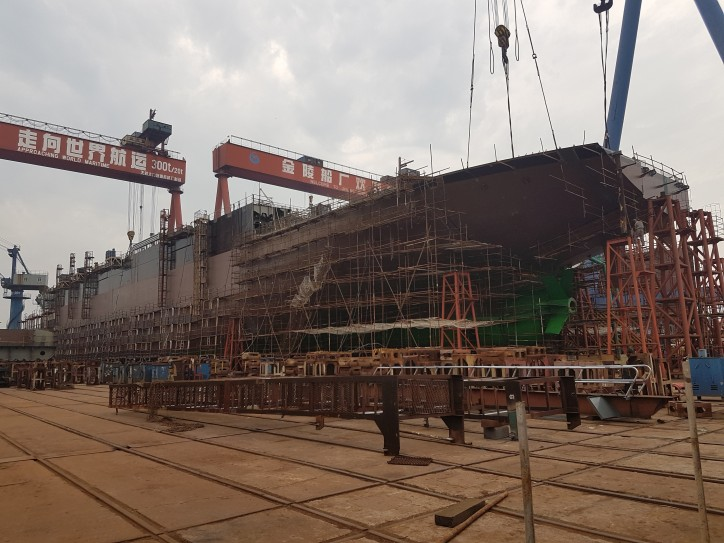
Marine Atlantic has announced a five-year charter agreement with Stena North Sea Ltd. to supply a new Ro-Pax vessel for its fleet. Following the initial agreement, Marine Atlantic will have an option to purchase the ferry. However the Crown corporation is under no obligation to exercise that option, and should the new ship not meet expectations it can simply be returned to the owners after the five years have elapsed.

The new vessel will offer energy efficient green ship technology, according to a media release issued on July 21. Its design will incorporate dual-fuel capability and will include batteries to further reduce its carbon footprint. The ship will be constructed with specific measures to reduce underwater noise, thereby reducing the impact on marine life. It will also offer enhanced power and thruster capability for maximum maneuvering ability during docking and undocking. This would appear to indicate that the challenges presented by the harbour at Port aux Basques will be specifically addressed in the design, as was the case with the purpose-built Caribou and Smallwood more than three decades ago.

The new ice-classed vessel will be just over 200 metres in length, about the same as the existing MV Blue Puttees and MV Highlanders, with the ability to carry similar numbers of commercial and passenger vehicles. It will incorporate the latest accessibility standards, carry up to 1000 people, have 146 passenger cabins (including pet friendly cabins), 40 passenger pods, a variety of food service options, seating lounges, a children’s play area, and a kennel for pets.

The ship will be compatible for use on both the Port aux Basques and Argentia routes and is expected to enter service in the 2024-25 fiscal year.

In Budget 2019, the Government of Canada provided funding for Marine Atlantic to replace an existing vessel. The corporation launched a request for qualifications (RFQ) in July 2019, with successful bidders moving to an RFP stage in June 2020.

-Ted Bartlett

INTERCITY BUS RIDERSHIP STARTS TO RECOVER

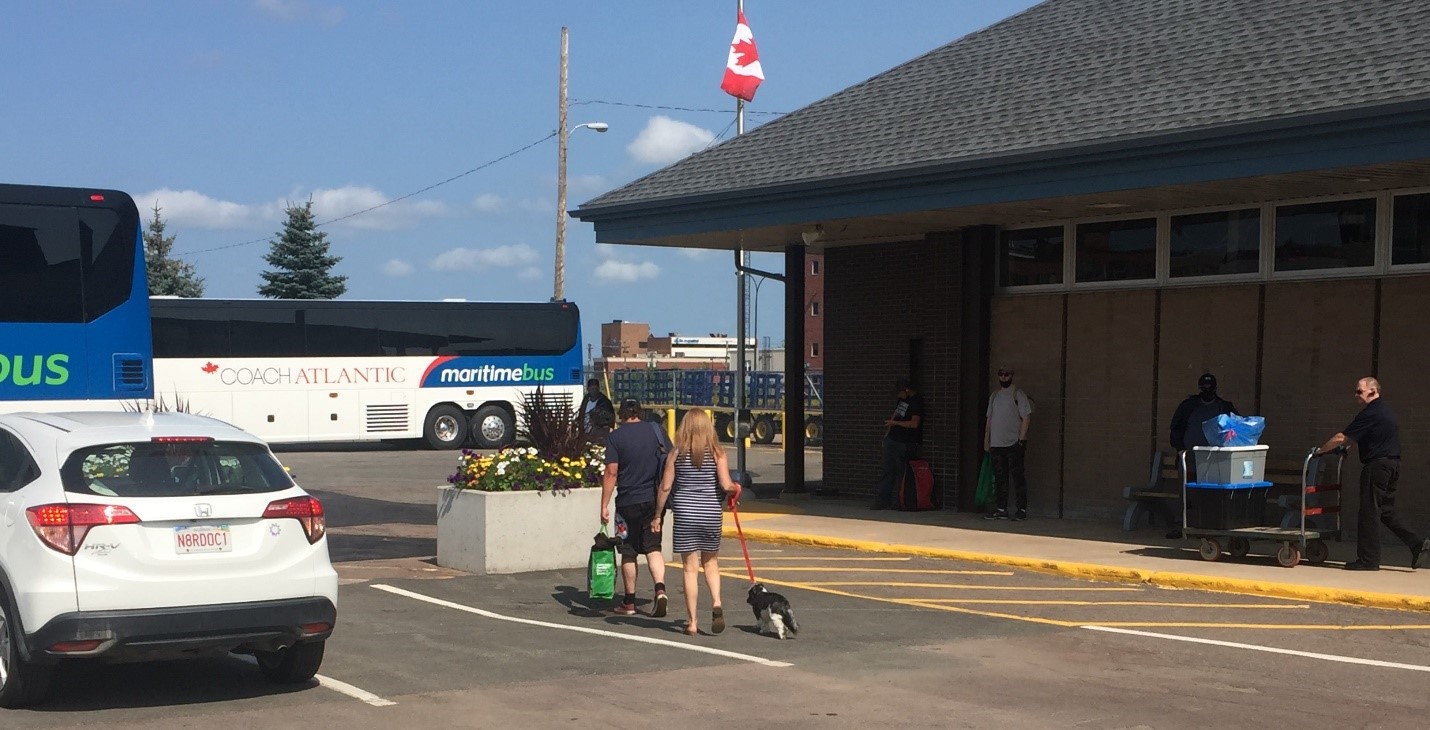
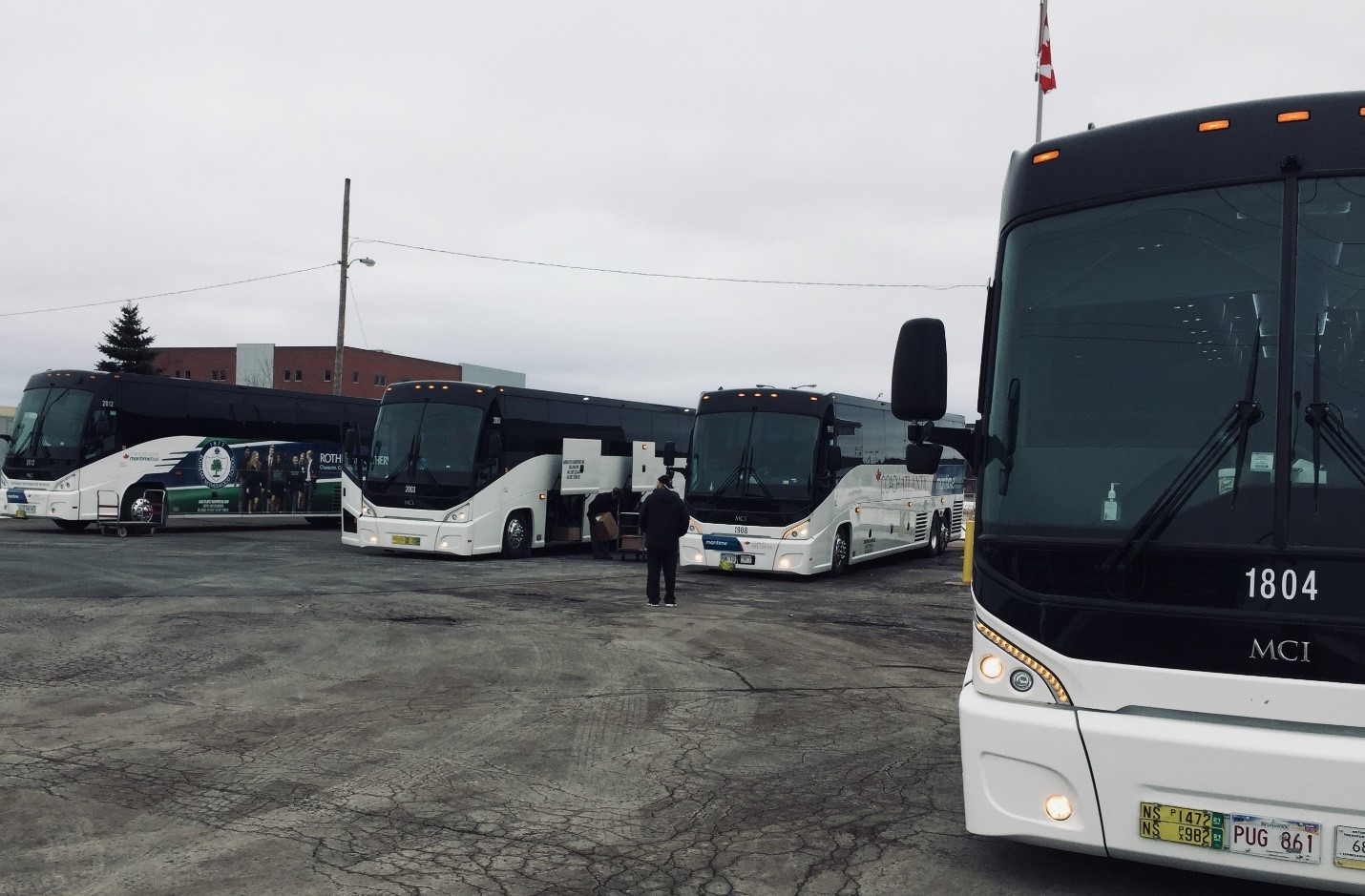
Travellers await Maritime Bus departures at Moncton on August 8. Ridership is showing some improvement as travel restrictions have eased, but there’s no indication about if or when interlining of passengers or packages beyond Edmundston might resume. (PHOTO – Ted Bartlett)

The essential service that Maritime Bus founder Mike Cassidy refers to as “public transit on provincial highways” is showing some signs of recovery with the reopening of the Atlantic Bubble. Maritime’s coaches continue to operate six days a week (daily except Saturday), with all communities on its route map being served on a limited schedule. However, there’s no indication as to if or when it might again be possible to ride the bus further than Edmundston, or to ship a package to points in Quebec or beyond. Mr. Cassidy says there’s been no action on restoring the interlining agreement with pre-pandemic partner Orleans Express.

Ridership figures were very low in early July, but improved as border restrictions among the Atlantic provinces were eased. Mr. Cassidy anticipates a daily average of 275 passengers in August, with his coaches logging about 5000 km per day compared to the pre-COVID full schedule of 10,000.

He adds that there’s still no indication that Ottawa’s Rural Transit Fund is going to offer any relief for struggling commercial carriers such as Maritime Bus and Newfoundland’s DRL coachlines. Neither is there any indication that the federal government is prepared to assume any form of leadership role in ensuring the restoration of a coast-to-coast network for passengers and parcels.

“Passion and a commitment to busing has allowed me to persevere through these trying COVID times,” he says. “We can never lose sight of the importance of an intercity bus service within the Maritimes moving passengers and time sensitive parcel freight.”

Meanwhile, DRL’s owner Jason Roberts tells Transport Action Atlantic that his company has lost over $1.3 million since the start of the pandemic, and although the COVID threat has subsided for now, he doubts he can maintain the service in its current form for much longer. He does have some hope that the provincial government will come through with some sort of assistance package. The federal government has an implicit obligation to ensuring continuing trans-island bus service, but to date has shown no sign that it is considering honouring that commitment.

-Ted Bartlett

AIRLINE SCHEDULES SLOWLY INCREASE AS AIRPORTS RECEIVE FEDERAL AID

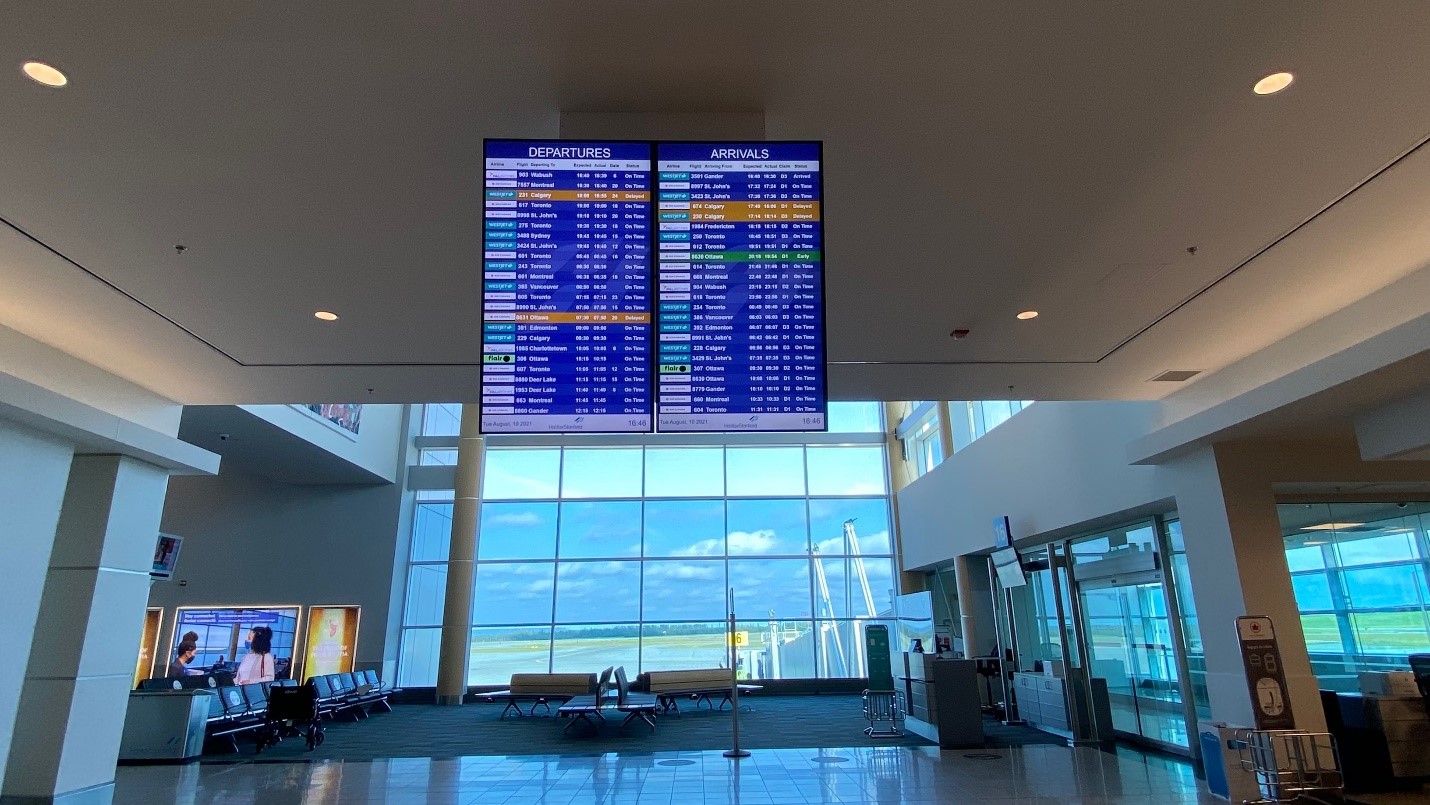
The arrivals/departures board at Halifax Stanfield International Airport on August 10 shows increased activity, but remains but a shadow of its pre-pandemic level. For context, it should be noted that the flights shown here cover a period of nearly 24 hours. (PHOTO courtesy of HIAA)

The long-term future of commercial air travel to, from and within Atlantic Canada remains an unknown as air carriers gradually increase their service levels in the region. Meanwhile, the Government of Canada has stepped in to assist regional airport authorities that faced massive revenue losses during the pandemic, and are continuing to feel the pinch as travel slowly rebounds.

The latest federal funding package was announced on August 9 – an $11.8 million contribution to the bottom line of St. John’s International Airport (YYT) under the Regional Air Transportation Initiative. Airport CEO Peter Avery said the funding would help in the recovery effort, and allow the facility to remain competitive. Earlier contributions under the initiative included $3.8 million each for Saint John (YSJ) and Fredericton (YFC), $3.1 million each for Charlottetown (YYG) and Deer Lake (YDF), $2.7 million for Sydney (YQY), and $2.4 million for Gander (YQX). Moncton airport (YQM) received a lesser amount to offset its operational losses, but was awarded over $5 million for capital improvements.

The number of flights in the region operated by Air Canada and WestJet is gradually increasing, but it is still nowhere near pre-pandemic levels. Meanwhile, Porter Airlines – in full hibernation since March of 2020 – will be returning to Atlantic Canadian skies in the first half of September.
Air Canada has not indicated any plans to resume most of its short-haul services in the region, with PAL Airlines filling some of the void, but on a much lower frequency. PAL has also commenced its promised service to Ottawa from St. John’s and Deer Lake, stopping at Moncton or Fredericton on alternate days.

The region’s largest and busiest airport, Halifax Stanfield, remains “international” in name only for the time being, although as of August 9 it is permitted to once again accommodate US and overseas departures. Spokesperson Tiffany Chase tells TAA that Condor Airlines is planning to offer a short fall seasonal service to Frankfurt from September 9 to November 4. There is some suggestion that US flights might resume in October, but there’s no indication yet as to plans for overseas operations to or from YHZ by either Air Canada or WestJet. She was optimistic they might resume in 2022.

As of early August, Stanfield was handling a daily average of 50-60 arrivals and departures carrying between 3000 and 4000 passengers, compared with pre-pandemic levels of 200 daily flights accommodating 11-12 thousand people. Currently flights to and from YHZ are serving only 16 destinations, compared to 46 pre-COVID.

-Ted Bartlett

Atlantic Transport News – July 2021

Welcome to the July edition of Atlantic Transport News!

Here’s a look at what you’ll find in this edition:

ELECTRIC FERRIES PLANNED FOR HRM

A look at the proposed new ferry routes under Halifax’s Rapid Transit Strategy. The first route from Mill Cove to downtown Halifax got a major boost in the past month, with funding from all levels of government to move the project ahead. GRAPHIC – Halifax Regional Municipality

Halifax Transit has received a major boost to one of their rapid transit plans, as all levels of government have stepped in with funding to move ahead with a plan to launch a fast, electrified ferry service from Bedford into downtown Halifax. Halifax Transit had announced the plan as part of their Rapid Transit Strategy, and in June the federal, provincial and municipal governments announced funding support to move the project toward becoming reality.

The full project, which will involve the construction of new ferry terminals, replacement of the downtown Halifax terminal, and the purchase of new vessels for the service, is estimated to cost $134.5 million. An initial $3.3 million study to plan and engineer the service will be supported by $1.1 million from the province of Nova Scotia, $1.3 million from the federal government, and another $917,000 from the Halifax Regional Municipality. This phase of the project is expected to be complete in 2022, with hopes that the ferry service will be able to launch in 2024.

In a separate announcement, the HRM announced a tender for design concepts for the rebuild of the downtown terminal and the design of the new Mill Cove terminal. The downtown terminal will need to be expanded significantly to accommodate the new electric vessels planned for the service, and the Mill Cove terminal will need to include bridges across the CN rail line.

A fast ferry service has been proposed a number of times over the years as a solution to traffic congestion on the Bedford Highway, and as a way to provide a more efficient public transit connection into the downtown core. When recent attempts at commuter rail fell through, the ferry service has again risen to the top as a viable option, promising travel times to downtown that can beat driving even at off-peak times, and far exceed anything that is possible by car or bus during peak rush hour. With the new addition of exploring an all-electric ferry, the service is even more attractive to multiple levels of government that are prioritizing a shift to clean, sustainable public transportation options. All being well, this will turn out to be the first step in an important expansion of Halifax’s transit network.

-Tim Hayman

ATLANTIC BUBBLE OFF TO A SHAKY START – AT LAST!

Traffic was backed up as far as the eye could see on the Trans-Canada Highway near Amherst NS as protesters expressed their displeasure with more stringent provincial travel restrictions imposed just days before the 2021 version of the Atlantic Bubble was launched. This year there’s less consistency among the provincial governments, so travellers would be wise to check the rules in advance before attempting to cross provincial boundaries. PHOTO – RCMP on Twitter

It will be a bit different from last summer’s successful formula, but the 2021 version of the Atlantic Bubble is finally up and running. Postponed several times, the arrangement permits travel (with a few restrictions) among the four provinces, without the requirement to self-isolate. The four governments had evident difficulty in reaching a consensus, perhaps due in part to the presence of two new premiers in the mix this year. In any event, it did not come together without a rather public difference of opinion between the premiers and chief medical health officers of Nova Scotia and New Brunswick – one that resulted in a protest blockade of the Trans-Canada Highway near Amherst that required RCMP intervention, and got the local MLA booted from the NS PC caucus over her apparent role in the illegal activity.

With the rapid acceleration of COVID inoculations throughout the region and a steep decline in active cases during June, the travel outlook is certainly looking brighter for the summer of 2021. As of July 1, Nova Scotia was reporting 51 cases, down from 369 a month earlier; New Brunswick had 24 compared to 142; NL had just five, a drop from 90; and PEI had only one, having gone for over three weeks during June without a single new case being reported. Nonetheless, visitors to the Island this year must apply online for a “PEI Pass” prior to arrival. That’s just one of many variations in the rules among the provinces, so travellers would be well-advised to check in advance before hitting the road to avoid any unpleasant surprises.

VIA RAIL PREPARES TO RESUME OCEAN SERVICE – BUT IT WON’T BE THE SAME

When the post-pandemic Ocean returns, among the missing amenities will be the iconic Park-series domed observation cars. Designed to operate in the forward-facing direction only, they can no longer be turned at Halifax. VIA hasn’t yet provided full details of future train consists, but we will soon find out when a train makes its way to Halifax for the service resumption. PHOTO – Ted Bartlett

It’s been a long 17 months, but VIA Rail’s Ocean service is finally returning to the Maritimes – even if it won’t look quite the same as it did when the last train departed in March of 2020. VIA has just announced that the Ocean will resume its operations from Halifax on August 11, 2021, with a single weekly departure in each direction.

https://media.viarail.ca/en/press-releases/2021/rails-ocean-service-gradually-resume-starting-august-11

The first train will depart Halifax on August 11th, and the first eastbound trip will depart Montreal on August 15th; this will make for a schedule featuring Wednesday departures from Halifax and Sunday departures from Montreal, presumably following the same timetable as before the pandemic. VIA has labeled this a “gradual” resumption of service, and expressed optimism that additional frequencies will follow shortly; at the time of writing, an advisory on the VIA website shows tri-weekly service resuming in October, but this is always subject to change.

Consistent with trains like the Canadian that have been operating up to this point, the Ocean’s on board service offering will be much different during the first days of operation. Both Economy and Sleeper classes will be offered, in a mix of Renaissance and HEP1 stainless steel equipment, but passengers will not have free movement throughout the train. Sleeper passengers are asked to stick to their rooms for the duration of the trip, and Economy passengers to stay at their seats aside from trips to the washroom, or presumably stretch breaks at longer station stops. Passengers must wear masks on board, in keeping with federal requirements, except when eating or drinking or when in their own private rooms. Food service will be provided by cart to Economy passengers, and by room service to sleeper passengers – no meals in the dining car, for now. There will also be no lounge access for the time being, and while a Skyline dome may eventually be included in the consist, there won’t be one for the time being. As has been the case throughout the pandemic, all of these restrictions are subject to change as the situation evolves.

A special deadhead train will soon head east to ferry equipment from Montreal to Halifax to allow for crew training and the first departure from Halifax (*UPDATE: This deadhead train arrived in Halifax on the morning of July 13th). With the service shut down for such an extended period, quite a number of crew members have no doubt chosen to take retirement or have found other employment, so new on board crew training will be essential. Once this consist heads east, we should finally get a look at the new incarnation of the Ocean, now that the train cannot be turned. We expect to see a hybrid hodge-podge of Renaissance and HEP equipment, with baggage cars on both ends and no Park car, on account of the need to run the train in reverse for the return trip.

Regardless of the changes to the train, it is still a positive sign to see VIA’s return to the region, and TAA will continue to advocate for a full service resumption as soon as possible, and further improvements moving into the future.

VIA’s return to Halifax – on July 13, 2021, a full 16 months after the last train #15 departed on March 13, 2020, VIA equipment has at last returned to Halifax. With the locomotives back to back and the new bidirectional consist in tow, this consist will be used for on board crew training over the next several weeks, and depart Halifax as train #15 on August 11th. PHOTO – Tim Hayman

“OPEN WITH AN ASTERISK” – A DIFFERENT SUMMER AT MARINE ATLANTIC

MV Atlantic Vision will be making fewer appearances at Argentia this summer. Pandemic precautions have reduced the maximum passenger numbers to 300 per crossing, and a reduced level of customer amenities will be offered. PHOTO – Ted Bartlett

More than two weeks delayed from the originally planned date, MV Atlantic Vision docked at Argentia NL on the morning of July 5, marking the launch a scaled-down 2021 seasonal service. Although it is a significant improvement over 2020 when the route did not operate at all, the Vision will be sailing this summer under the dark cloud of COVID-19. Consequently, many of the onboard amenities that had helped make the trip a special travel experience in recent years won’t be offered. And, there will be only two weekly round trips instead of the usual three.

Colin Tibbo, Marine Atlantic’s chief information officer and acting vice-president of customer experience, says there is sufficient flexibility in their operational plan to allow for a third return crossing should demand exceed expectations. But for now the departures from North Sydney will be at 1730 ADT on Sunday and Wednesday only, sailing from Argentia at 1700 NDT on Monday and Thursday. To allow for social distancing there will be a limit of 300 passengers per crossing, which means much of the auto deck space will be empty. Most of the passengers are expected to be in cabin accommodation, and Mr. Tibbo notes that demand for private rooms is stronger than ever. In fact, he senses a trend where this is a make-or-break condition for many prospective customers. However, the good news for unberthed passengers in lounges is that they will be sufficiently spaced so that wearing of masks will not be required once they are seated.

The popular buffet dining option on the Vision has fallen victim to the pandemic – perhaps permanently – and the upscale dining room experience will also not be offered this year. The only alternative to the ship’s rather small snack bar will be a light meal service available in the bar lounge area.

Mr. Tibbo said the company did not want to cancel the Argentia run again this year, despite the pandemic uncertainty, because they consider it to be an important part of their summer service offering. He noted that, despite the limited amenities, the initial July 4 departure was booked to 98% of its reduced passenger capacity a few days prior to sailing, which attests to the popularity of the seasonal route. The online “rolling schedule” that now allows customers to reserve up to 16 months in advance shows a return to three weekly crossings in 2022.

A similar passenger limitation applies to the year-round North Sydney-Port aux Basques route, where there are a minimum of two daily sailings. Public health measures are likewise in effect, and passenger amenities have been reduced accordingly. Commercial drivers are now berthed in single-occupancy cabins, which places additional pressure on accommodations aboard the Blue Puttees and Highlanders. The volume of commercial traffic hasn’t been significantly affected during the pandemic, and passenger bookings as of early July were running between 30 and 40 percent higher than corresponding dates in 2020.

Customer expectations for Marine Atlantic appear to have adjusted somewhat because of COVID-19, just as they have elsewhere in the transportation and hospitality industries, but Mr. Tibbo expects they will become higher with the passage of time. He’s reluctant, however, to predict timelines for the return to a higher level of customer amenities.

“We’ll see how it unfolds,” he says, “For now, we’re open – with an asterisk!”

-Ted Bartlett

MARITIME BUS BEGINS SIX-DAY OPERATION; DRL SOLDIERS ON

After a financially-challenging winter and spring, maintaining service only three times a week, Maritime Bus increased to a daily-except-Saturday schedule at the end of June. Owner Mike Cassidy is looking ahead to better days, but there’s still no indication of any federal support for a national integrated motorcoach network. PHOTO – Ted Bartlett

With the rejigged Atlantic Bubble now in effect, Maritime Bus owner Mike Cassidy is looking ahead to better days – but he finds it hard to be optimistic. In anticipation of increased travel, the company bumped its schedules up to six days a week effective June 23, but uptake has been very slow, with three different reopening plans in the Maritime provinces having a dampening effect on ridership.

There’s been no response to date to the industry’s urgent pleas for federal support and a modest financial commitment to help rebuild a national intercity motorcoach network in the wake of Greyhound’s complete abandonment of Canadian service and the devastation of COVID-19.

“It appears as if there is no champion at the federal or provincial level,” Mr. Cassidy commented. “All I can say is that busing in Canada needs help.”

Meanwhile in Newfoundland, the orange DRL coaches are still plying their 900 km. route, serving 25 stops along the Trans-Canada highway from St. John’s to Port aux Basques. This despite a warning from owner Jason Roberts last month that financial pressures might force the company to cease operations. There’s been no word on the possibility of any assistance from the cash-strapped provincial government, along the lines of emergency aid extended earlier this year to Maritime Bus by Nova Scotia, PEI, and (after some prodding) New Brunswick.

But unlike elsewhere in Canada, there appears to be some onus on Ottawa to support DRL, which acquired the trans-island bus service from newly-privatized Canadian National in 1997. The so-called “Roadcruiser Service” had replaced the CN passenger train in 1969, and federal government responsibility to ensure continuing service at fares consistent with passenger rail elsewhere in Canada was acknowledged in the 1988 federal-provincial Memorandum of Understanding that provided for final abandonment of the Newfoundland Railway. However, none of the province’s six Liberal MPs have as yet weighed in on the issue.

SHUTTERED AIRPORTS REOPEN – WITH SOME NEW SERVICES

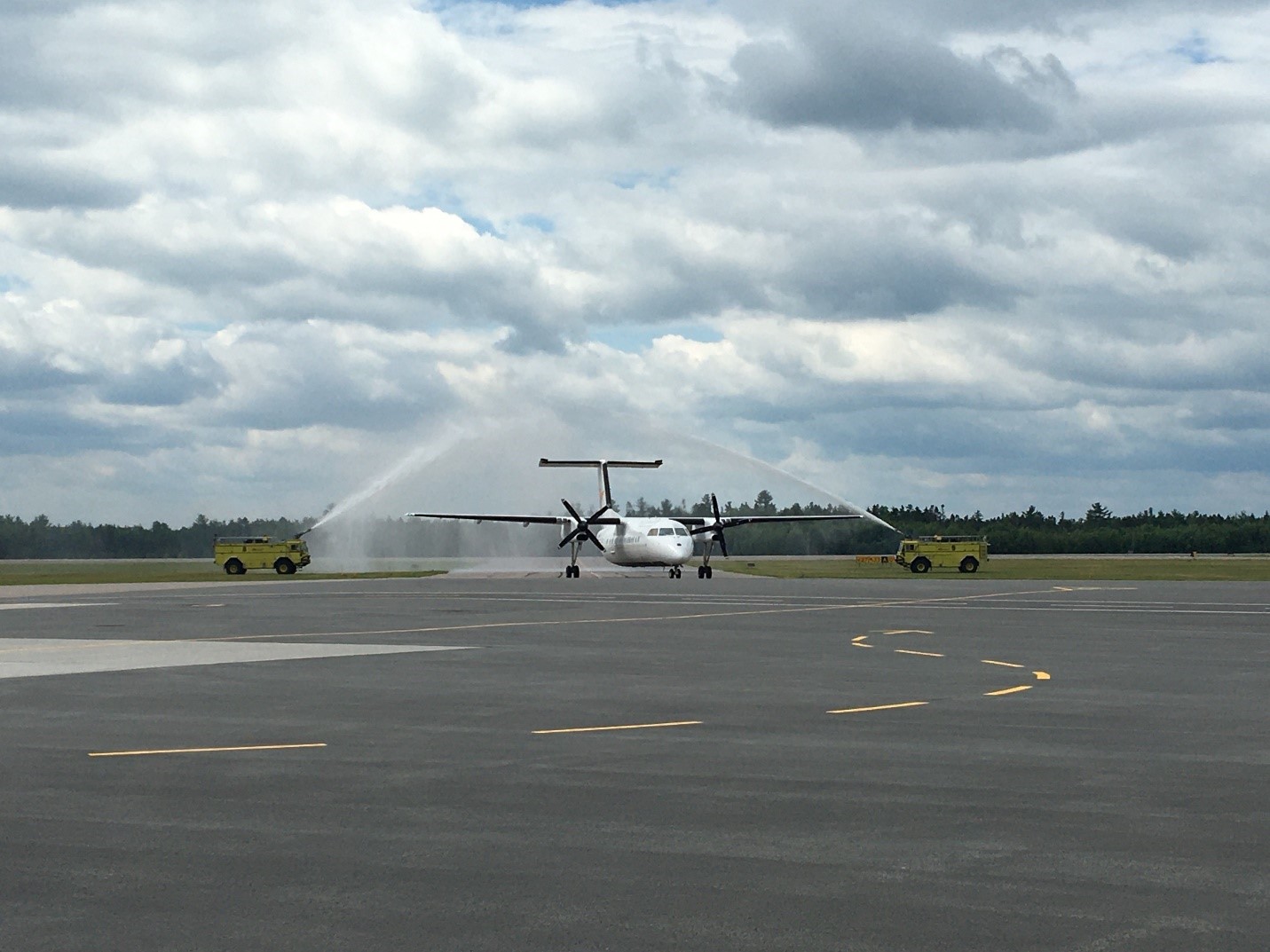
A water cannon salute greets PAL flight 905 on its inaugural arrival at Fredericton from Newfoundland on June 28. YFC was one of three Maritime airports to reopen late last month, after being closed since January. PHOTO – PAL Airlines

With the gradual lifting of COVID-19 restrictions, the aviation industry in Atlantic Canada is at last on final approach to what may prove to be a long period of recovery. Three regional airports in the Maritimes that had been completely devoid of scheduled passenger service for more than five months reopened for business in late June, and flight frequencies at others that had maintained limited service during the pandemic were noticeably increased. There were even some new destinations on departure boards around the region as airport spokespersons expressed cautious optimism.

Notable among recent developments was the return of scheduled service to Saint John, Fredericton and Sydney, which had been in hibernation since January. In addition to the return of Air Canada services to Toronto and Montreal, and WestJet flights to Toronto, YFC welcomed its first-ever direct service to and from Newfoundland with a tri-weekly flight by PAL Airlines to and from St. John’s with an intermediate stop at Deer Lake. In addition to the return of Air Canada service, discount carrier Flair Airlines was offering flights to Toronto from YSJ for as little as $49 one-way on a once-a-week 737 jet. At Sydney, WestJet resumed service to and from Halifax, while Air Canada was offering direct flights to Toronto.

St. John’s welcomed the return of direct service to Toronto by both Air Canada and WestJet, after an absence of several months. It would appear that Air Canada has no plans to resume local services between Halifax and various Maritime airports, but it looks like PAL is moving in to take up where the national carrier left off. PAL’s ambitious expansion plans also include offering service to Ottawa beginning in August. And by the time Porter Airlines returns to the skies in September, they may find the field a little bit crowded.

But make no mistake: air travel is by no means back to normal, or even approaching a new normal. The majority of the reinstated services are at greatly reduced frequencies – less than daily in many cases. Even the most optimistic air travel advocates will acknowledge that the road back will be a difficult one. Many restrictions remain in place, with most airports limiting access to their facilities strictly to passengers holding tickets. Most food and beverage concessions have not reopened, and masks must be worn continuously from entering the departure terminal until the exit on arrival.

There’s been no indication as to if or when overseas flights might return to Halifax Stanfield International Airport. For the foreseeable future, Atlantic Canadians destined to Europe or the UK will be obliged to fly several hours in the wrong direction before heading across the big pond.

NEW RURAL AND SMALL TOWN TRANSIT INITIATIVES UNDERWAY

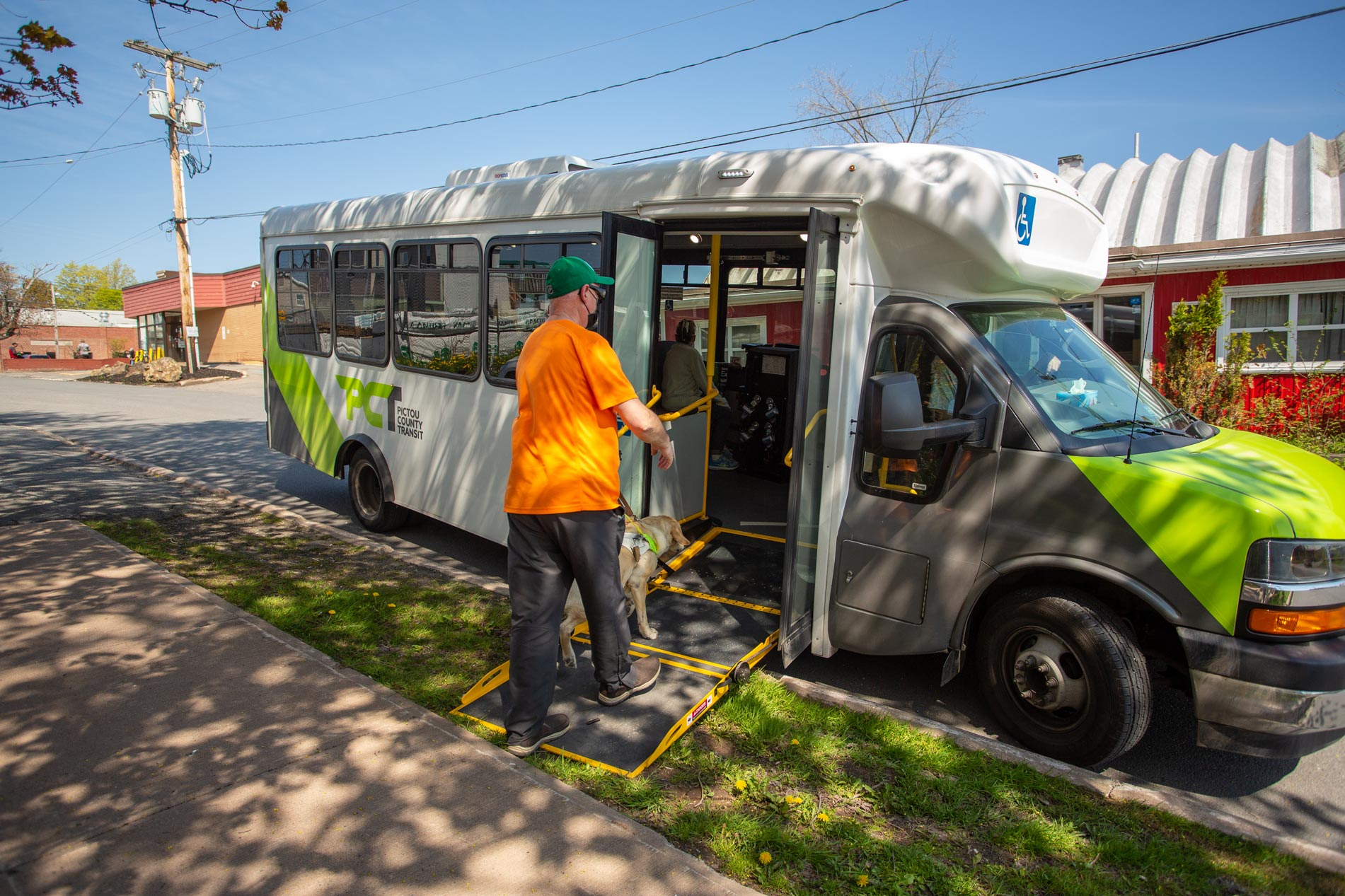
A new fully-accessible transit service in Nova Scotia’s Pictou County launched on May 17, bringing public transportation back to New Glasgow and Stellarton after a 25-year absence. PHOTO – PC Transit

Residents of the Nova Scotia towns of New Glasgow and Stellarton are once again able to avail of public transit. Pictou County has not seen such a service since 1996, and the three-year pilot project should provide ample opportunity to prove that it is both needed and sustainable. 

Ridership numbers will determine if the service continues past the three-year trial, and promoters emphasize it is very important the community support the service by using it. 

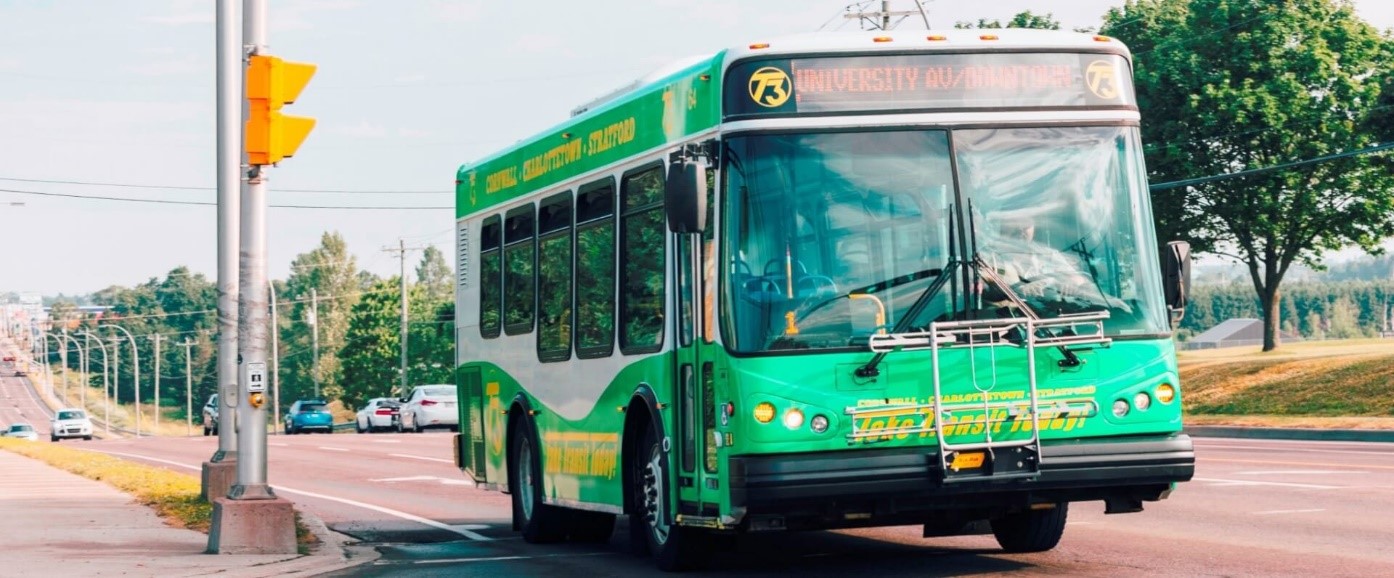
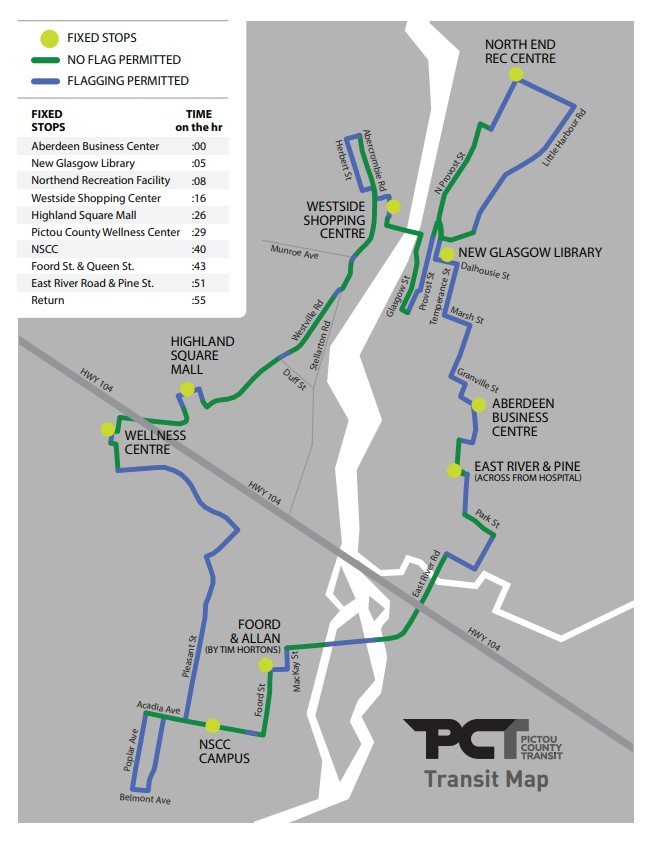
The route is a one-hour bus loop through the two towns, but it’s been named Pictou County Transit in the hope that other communities will join in. 

The new, fully accessible, one-door-for-all, low-floor bus made its inaugural run on May 17.  The $190,000 capital cost was underwritten by the Province of Nova Scotia, which is also fully funding the first year of operations. Years two and three will see Stellarton and New Glasgow pay $50,000 and $100,000 annually, respectively. 

Meanwhile in New Brunswick, the community group Eastern Charlotte Waterways (ECW) has been awarded a rural transit pilot project grant by Environment and Climate Change Canada.  The federal funding will provide a new ride-share transportation system to the community of Blacks Harbour and the southwest New Brunswick region.

A media release says that issues of mobility and accessibility in rural communities are well documented, and Blacks Harbour is no exception. This pilot project aims to address these transportation issues by providing a fleet of electric cars for community-wide use. It will act as an on-demand door-to-door service. The new rideshare system which will launch in the fall of 2021, is the natural next step in working towards designing sustainable systems for rural communities in Charlotte County.

“ECW’s mandate has always been supporting sustainable projects that benefit local residents and the environment,” says Rick MacMillan, the group’s chair. “This investment will improve accessibility and the livelihoods of people in our community while raising the profile of the village to attract new businesses, visitors, and residents. Providing this climate-friendly ride-share program helps facilitate the community’s potential growth through connectivity.”

Blacks Harbour and the greater southwestern New Brunswick region has not had a public transportation option since the end of the RuralLynx project in 2020. With federal support, ECW will be able to operate an integrated public transportation model, built upon eight years of extensive research and reports from the Southwest Transit Authority Board as well as other community organizations both in and outside the province of New Brunswick. The announcement notes that the ECW team will be working collaboratively with key community partners that include the Charlotte County Multicultural Association and Vibrant Communities Charlotte County to ensure the pilot project is successful in providing all community members with an efficient, affordable and climate-friendly way to get around. This rural transit pilot project is described as an investment in social infrastructure that prioritizes rural communities and facilitates future growth.

FARES REMOVED FROM NOVA SCOTIA PROVINCIAL FERRIES

Passengers on the Englishtown Ferry in Cape Breton will no longer have to pay a fare, nor will users of any other of the intraprovincial ferries in Nova Scotia. PHOTO – Tim Hayman

Drivers in Nova Scotia will no longer have to pay to use any of the province’s seven intra-provincial ferry services, as the provincial government announced the permanent removal of ferry fees in late June. The ferry services, operated by Nova Scotia’s Department of Transportation and Infrastructure Renewal, include those at Englishtown and Little Narrows in Cape Breton, Country Harbour on the Eastern Shore,  Tancook and LaHave on the south shore, and Petit Passage and Grand Passage on Digby Neck.

When announcing the permanent removal of user fees, which had been waived in 2020 during the Covid-19 pandemic, Premier Iain Rankin said the change will make transportation more “affordable and accessible for Nova Scotians”. Transportation Minister Lloyd Hines noted that the fees only covered a small percentage of operating costs, and were inefficient to collect and becoming an increasing burden to administer.

The province hopes that the removal of fees will help to encourage tourism by making more parts of the province more easily accessible, though it’s likely no coincidence that a provincial election is expected in the coming months.

Atlantic Transport News – February 2021

Welcome to the February edition of Atlantic Transport News!

Here’s a look at what you’ll find in this edition:

NORTHERN NEW BRUNSWICK MOTORCOACH SERVICE SAVED

With Jacques Pelletier at the wheel, Maritime Bus departs Moncton for Campbellton on the afternoon of February 1. This essential service for residents of northern New Brunswick will keep rolling through 2021, after a last-minute deal was reached among the bus company and three levels of government. 

New Brunswickers in the northern part of the province will continue to benefit from motorcoach passenger and parcel service through the remainder of 2021, after an eleventh-hour solution involving Maritime Bus and three levels of government was reached. Faced with mounting operating losses, the bus operator announced indefinite closure of its services between Moncton and Campbellton and Fredericton and Edmundston, effective January 15, unless the provincial government was prepared to lend a helping hand. The deadline was subsequently extended to month-end to allow more time for a solution to be worked out.

Although the governments of Nova Scotia and Prince Edward Island had declared their willingness to offer financial support to keep buses running through the pandemic, Premier Blaine Higgs refused to contribute, saying his government wasn’t going to fund for-profit corporations. The position ignored the harsh reality that the company lost nearly $4 million on its line-haul operations in 2020 because of COVID-19 – not to mention the massive revenue losses when its charter operations were brought to a standstill by the pandemic.

Under pressure from a wide variety of interests (including Transport Action Atlantic), the government finally backtracked. In a rare display of non-partisan solidarity, 21 senators from the Maritime provinces signed a letter to the Prime Minister urging help for the struggling bus industry. With a federal government contribution under the Safe Restart program on the table, the Province allocated some money through its Regional Development Corporation, and saved face by transferring the provincial share to the City of Edmundston to be passed on to Maritime Bus.

The northern municipalities, although pleased that a solution has been reached, were less than satisfied with the process. Apparently, this money was diverted from funding that the RDC was already holding for eventual distribution to towns and cities under the Safe Restart agreement, so the already cash-strapped municipal coffers were in effect paying for what they viewed as a provincial responsibility.

Mike Cassidy of Maritime Bus credits Local Government Minister Daniel Allain and Frédérick Dion of the Federation of Francophone Municipalities with brokering the eventual outcome, with the support of the senators and federal Intergovernmental Affairs Minister Dominic LeBlanc. Curiously, the Department of Transportation and Infrastructure apparently wasn’t involved in the process at all.

Mr. Cassidy tells TAA that the level of political action in all this was incredible, commenting that it isn’t right to be so involved with politics when you are trying to save your company and industry, especially after the other two provinces agreed participate. Meanwhile, he is deeply concerned about the future of the motorcoach industry nation-wide, and is working with other operators to promote bus connectivity across Canada for both passengers and parcels post-COVID.

“Governments must understand that busing is part of the mobile infrastructure,” he says, adding that the first step should be getting all the provinces to co-operate in building back a cohesive coast-to-coast network.

MARINE ATLANTIC RATES INCREASED AGAIN

If you’re planning on taking Marine Atlantic’s Argentia ferry this summer, it’s going to cost you more. The Crown corporation has announced that most of its rates will be increasing as of April 1, in order to satisfy Transport Canada demands for 65% cost recovery.

It appears that Transport Canada is totally without mercy in its demands for 65% cost recovery on the constitutional Newfoundland ferry service provided by Marine Atlantic – global pandemic notwithstanding. On February 1 the federal Crown corporation announced that most of its rates would be going up at the start of the next fiscal year, beginning in April. A company spokesman told NTV News that Marine Atlantic had failed to meet its financial targets in 2020 because of dramatically reduced passenger revenues, and had no option but to aim for making up the shortfall in 2021.

There will be no increase in passenger and passenger vehicle rates on the North Sydney- Port aux Basques route, but both passenger and commercial users of the seasonal Argentia route (where Transport Canada requires full recovery on marginal costs) will pay 2.5% more. That, of course, assumes that the service actually runs this summer. It was cancelled entirely for 2020, but reservations are now being accepted for two round trips a week beginning in late June, with the possibility of a third sailing being added should demand materialize.

But far more critical is the two percent increase for commercial traffic on the company’s main route to Port aux Basques, coupled with a 3.4% hike in the drop trailer management fee. This is expected to have a noticeable impact on the cost of living on the island, as a large proportion of groceries and everyday household needs as well as building supplies are carried by drop trailers.

For the hospitality industry the fare hike comes at a particularly inopportune time. In the aftermath of COVID-19, with air transportation in serious crisis and unlikely to recover in the near future, affordable ferry service will be particularly important to the struggling tourism sector. If the Atlantic Bubble is restored by summer 2021, Marine Atlantic will be uniquely positioned to bring significant numbers of visitors from the Maritimes – if the price is right.

With no expectation the rate increase was imminent, Transport Action Atlantic had already initiated an effort to get ferry rates on the table as an issue in the February 13 provincial election. Although the service is clearly a federal responsibility, TAA believes the issue will only be addressed if there is a strong protest from provincial politicians. Accordingly, the parties had been asked to present their positions by answering two questions:

  • Does your party support the principle that the ferry service between Port aux Basques and North Sydney is a part of the Trans Canada Highway, and as such the cost to users should be comparable to travelling the equivalent distance by road?
  • Regardless of the outcome of the February 13 provincial election, will your party demand a full review of the existing Marine Atlantic ferry rates to ensure that the Government of Canada is compliant with the spirit of the 1949 Terms of Union?

TAA plans to post any responses received on its website prior to polling day.

ANOTHER SEASON LOST FOR BAR HARBOR FERRY

The Cat will sit idle for another year, as the full 2021 ferry season has been cancelled. PHOTO – Tim Hayman

It will be at least another year until the international ferry service between Yarmouth and Maine resumes. On February 1, the provincial government announced that the entire 2021 sailing season would be cancelled, citing ongoing COVID concerns, continued international border restrictions, and the likelihood that a critical percentage of the general population will not be vaccinated until the summer. The move is anticipated to save on certain costs such as marketing and season preparations and hiring crew, which would otherwise have taken place if the season was scheduled and later postponed or canceled. Still, there will be certain fixed costs to keep up basic maintenance and infrastructure work in the interim.

This will be the third year in a row that the high-speed Cat ferry will sit idle. The service for the 2019 season was slated to move its American terminus to Bar Harbor after previously serving Portland, but the move ran into hurdles with the completion of the new American facility, resulting in repeated postponements and then full cancellation of the season. With the terminal then complete, the 2020 season was anticipated to see a return, but COVID restrictions once again caused postponements and an eventual cancellation of the full season.

The absence of the ferry service has continued to be a blow to the tourism industry in southwest Nova Scotia, though as COVID continues to restrict non-essential travel, those challenges will persist with or without the ferry in operation. Hopefully the 2022 season will find the region (and the broader world!) in better shape.


AIRPORTS PLEAD FOR HELP AS SERVICE CUTBACKS CONTINUE

Graphic by James Fraser

Just when we thought the air travel situation in Atlantic Canada couldn’t get much worse – it did. Just days after indefinitely suspending all service from Sydney and Saint John, Air Canada added Fredericton to its no-fly list. As of January 23, the only airport in New Brunswick with scheduled passenger service is Moncton. And, on the same date, the direct Air Canada service between Toronto and St. John’s which had existed for decades came to an end.

The cutbacks in scheduled service have had a drastic effect on all airport authorities in the region.  Even for those now deserted by Air Canada and WestJet, the bills still have to be paid as the runways must be kept open for general aviation and emergency medical flights. The total revenue loss for 2020 among members of the Atlantic Canada Airports Association is estimated a $140 million, which the ACAA says will have a substantial impact on cash flow and future financial viability, with a severe trickle-down effect on the respective communities. They’re asking for federal government help to keep the lights on while they await the end of the pandemic. But even then, they aren’t expecting a rapid recovery.

Meanwhile, a retired airline executive told CBC News that he isn’t anticipating a quick resumption of the cancelled services once the pandemic subsides. Duncan Dee, former COO at Air Canada, said reactivating idle aircraft and personnel takes time, adding that he suspects management will take a “wait and see” attitude and evaluate demand at Moncton before making a decision on other New Brunswick airports.

The chambers of commerce in New Brunswick’s three largest cities are not content to wait. They’ve joined together in a united campaign to oppose those who suggest that single airport scheduled passenger service for the entire province may the way of the future. That possibility was raised in the recent provincial budget speech.  Moncton, Fredericton and Saint John were all profitable airports pre-pandemic, with a combined economic impact of $765 million, the chambers note, insisting that economic prosperity demands that scheduled service be returned to all three as the public health threat subsides.

The one airline that seems to be bucking the pandemic trend has been forced to adjust its services from Moncton to Newfoundland and Labrador to accommodate the latest round of travel restrictions. St. John’s-based PAL Airlines has abandoned its service between Charlo NB and Wabush NL, and combined it with a new route linking Moncton with Deer Lake. And, until interprovincial travel restrictions are eased, non-stop service between YQM and YYT has been temporarily eliminated. As of January 10, a tri-weekly DASH-8-300 is flying St. John’s – Deer Lake – Moncton – Wabush and return. PAL’s Janine Brown says a daily St. John’s – Moncton – Ottawa routing is still their post-pandemic objective, with a separate service planned for Deer Lake and Wabush.

VIA SERVICE WON’T BE BACK BEFORE MID-MAY

It will be May 15 at the earliest before VIA Rail’s Ocean again pulls out of Montreal’s Gare Centrale – and likely not even then if interprovincial pandemic travel restrictions are still in place.

In what continues to be a pattern fitting of Groundhog Day, VIA has extended the cancellation of the Ocean through at least May 15, 2021. This continues the rolling pattern of recent months, where bookings for the next few months were first blocked and then outright cancelled as time approached. It also now guarantees that the earliest possible service resumption on the east coast will be the beginning of what would normally be the peak season for the year, though it’s unlikely to be anything resembling the normal travel season, and leaves Atlantic Canada without passenger rail service for more than a year. It still remains to be seen what exactly the service offering will look like when the train does resume.

The exact date that service will actually resume still remains unclear. The passenger carrier continues to insist that it intends to resume service when it is safe to do so, but it is likely that this date will be dependent on when travel restrictions between Quebec and the Atlantic provinces ease – and that remains heavily dependent on COVID case numbers and dynamics between the provinces.

VIA has also extended the modified service offering on the Canadian, with only one weekly departure west of Winnipeg and heavily modified onboard services, through the middle of May, and the Winnipeg-Churchill’s economy-only service will also continue through that time. Meanwhile, further Corridor service reductions have rolled out in recent weeks in light of further restrictions in Ontario and Quebec. It’s clear all across the country that the interruptions to VIA will be here for some time yet.


TAA AWARD HONOURS TRANSIT AND MOTORCOACH DRIVERS

Metrobus operator Amy Bonnington is one of hundreds of transit and motorcoach drivers who’ve kept essential public service rolling throughout the pandemic. Transport Action Atlantic has collectively honoured all of them with the 2020 John Pearce Award.

Transit systems throughout the region continue to struggle under the pandemic burden of greatly reduced ridership revenue coupled with higher operating costs. But they were pleased to receive a bit of recognition from Transport Action Atlantic recently. TAA has decided to confer its John Pearce Award for 2020 collectively on all the transit and motorcoach drivers throughout the four provinces who have continued to report for duty without interruption during COVID-19 in order to transport essential workers to their jobs and ensure mobility within their communities. They faithfully fulfilled their daily responsibilities, and not without significant risk to their personal health and safety despite all the precautions that had been put in place.

“Halifax Transit’s bus operators and ferry crews’ pride in public service during COVID-19 has been exemplary,” said Dave Reage, director of Halifax Transit. “I am so proud of their ongoing commitment to our customers and community. Throughout these challenging times, they have worked together to keep Halifax moving!”

Judy Powell, general manager of Metrobus Transit in St. John’s commented “During this difficult time, they put our customers ahead of themselves to ensure the people of our communities could access essential goods and services.”

The John Pearce Award is given annually to recognize an outstanding contribution to the public transportation cause. It was created by TAA in 2017 to commemorate the lifetime achievements in public transportation advocacy by the late Mr. Pearce, a founding father of the association’s predecessor Transport 2000 Atlantic, a past president, and long-time member of the board.