

Halifax commuter rail proposal greeted with cautious optimism

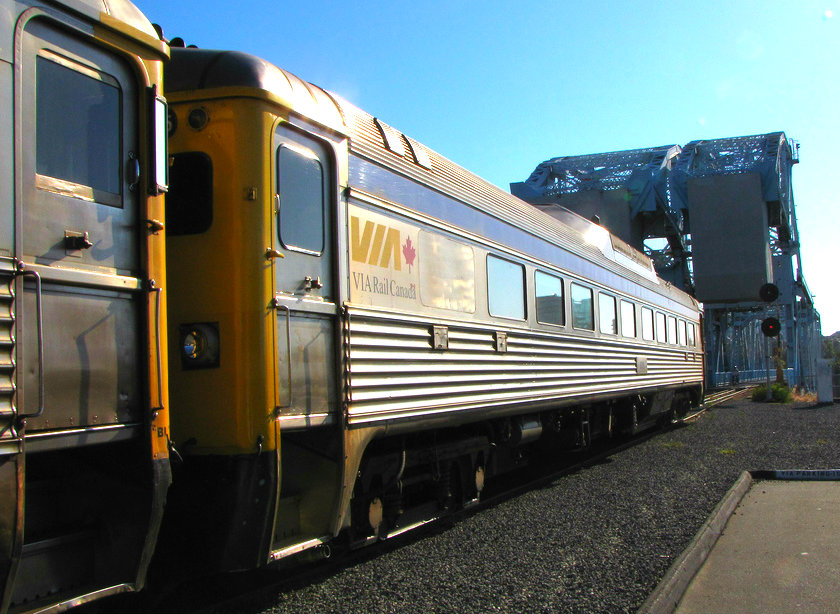
A VIA Rail self-propelled rail diesel car waits at a station
Could this be the future of commuter rail in Halifax? Self-propelled rail diesel cars (RDCs) could be a candidate for the service VIA Rail has proposed. (Photo by Tim Hayman)

Transport Action Atlantic is encouraged by another forward step this week in the Halifax commuter rail proposal. As a long-time advocate for convenient, affordable and sustainable public transportation, TAA is excited about the various developments in public transportation planning underway in Halifax at the moment, particularly the work underway on the Integrated Mobility Plan, but believes there is still much room for improvement. In addition to measures like transit priority and bus route redesigns, commuter rail has the potential to play a major role in the transportation future of Halifax, according to the public transportation advocacy group.

“There is undoubtedly an appetite right now for the development of commuter rail in Halifax,” says TAA vice-president Ashley Morton. “This was on clear display last year, with the strong showing at public meetings and the outpouring of overwhelmingly supportive comments from the public during that time. The current system needs improvement, and many people see commuter rail as the solution to slow commutes on the western side of the Harbour, caused by over-clogged roadways from Bedford, Sackville and Fall River towards the Peninsula.”

TAA believes Halifax has a unique opportunity for commuter rail. Unlike many cities that may wish to look at such a system, it already has an underutilized rail corridor linking several major suburban communities to downtown. The rail corridor parallels a major commuter thoroughfare, the Bedford Highway, along which there has been very significant population growth in recent years, passes Halifax’s three universities, and ends deep into the southern part of the downtown core, nearly on the waterfront.

“It once had additional tracks and hosted many more freight and passenger trains every day, so there is no doubt it could do so again with relatively small infrastructure investments,” Mr. Morton noted. “As many people said during the public engagement period last year, using this corridor for a commuter rail system just makes sense.”

Though supportive in principle, TAA is urging caution with the implementation of any new system. In order to be successful, commuter rail must be planned in the context of the greater Halifax transportation network, and designed to meet the needs of users, rather than simply being a system of convenience, dictated solely by what is the easiest to do. Careful consideration must be given to scheduling, integration with buses, the location and accessibility of stations, the type of equipment used, and the way the network can work with the mobility patterns in the city. Continue reading “Halifax commuter rail proposal greeted with cautious optimism”

TAA concerned about NL ferry rates

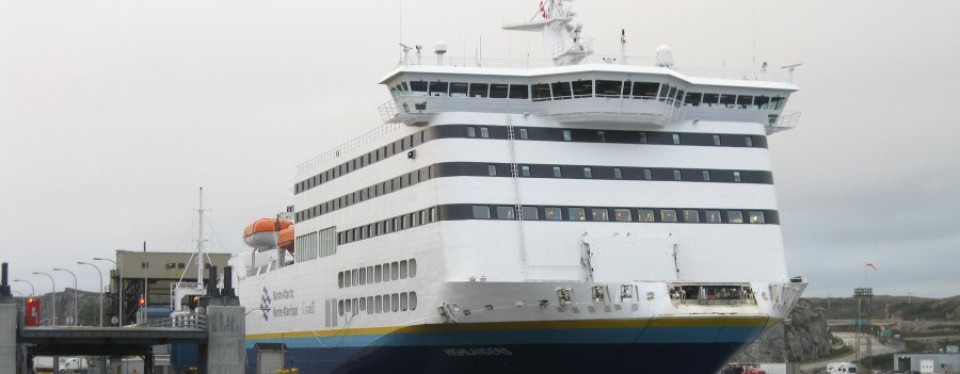
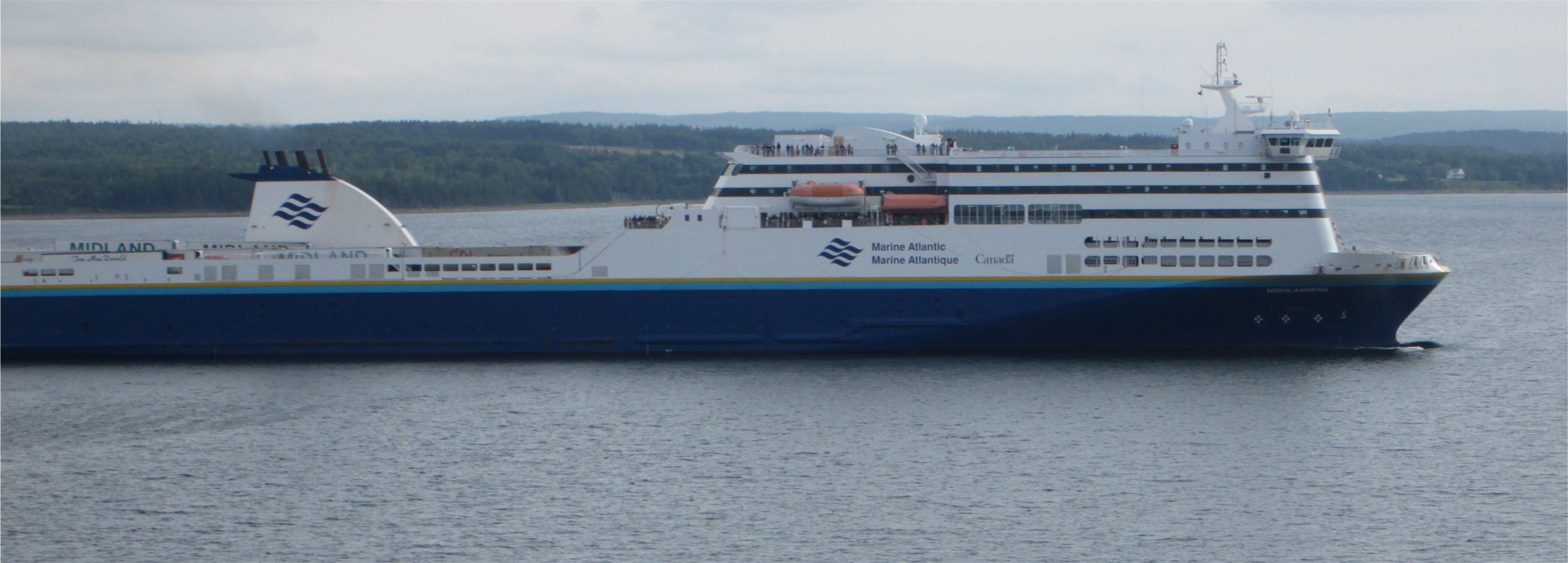
The Marine Atlantic Blue Puttees, a passenger and vehicle ferry, sails under an overcast sky

Marine Atlantic’s MV Blue Puttees approaching the dock in North Sydney, NS.

The cost of moving passengers, autos and freight between Newfoundland and the mainland has been one of those perennial issues that seems to rear its head on a regular basis.  But now the tale has taken a bizarre turn, with a private shipping company launching an action in the Federal Court of Canada alleging that Marine Atlantic’s rates for transporting commercial trailers between North Sydney and Port aux Basques are too low.

Oceanex – an intermodal transportation company operating three large vessels linking St. John’s with Halifax and Montreal – is alleging that the Minister of Transport has exceeded his jurisdiction in approving the current level of ferry charges.  The company claims its rail and trucking competitors have an unfair advantage because of subsidized Marine Atlantic rates, and that those rates are gradually eroding its market share.

Marine Atlantic’s tariff is approved by the Crown corporation’s board of directors, based on a cost recovery formula set by Transport Canada.  The subsidy history dates back to the Terms of Union negotiated in 1948 as the British colony prepared to enter the Canadian Confederation. The intent was to equalize transportation costs for the new province.

Using the circumstances of the time, Term 32 stipulated that the Cabot Strait crossing between North Sydney and Port aux Basques was to be rated as an “all-rail” movement.  In other words, the cost of moving freight was to be equivalent to rail transportation over the same distance – effectively treating the ferry as a land bridge.  Today’s Trans Canada Highway has replaced the railway in Newfoundland, but modernizing the intent of Term 32 should mean that the cost of transporting an intermodal trailer between the two ports by ferry should be no higher than that of hauling it over 185 kilometres of highway. Continue reading “TAA concerned about NL ferry rates”

VIA Rail partners with Maritime Bus

The logos for Maritime Bus and VIA Rail CanadaVIA Rail announced on June 21, 2016, that it is entering a new partnership with Maritime Bus that will allow passengers to book Maritime Bus tickets through VIA Rail. Starting July 14, passengers will be able to see bus options and purchase Maritime Bus tickets through VIA’s website.

This partnership will allow passengers to book connections between VIA and Maritime Bus to access destinations not served by VIA, or to book bus tickets on days and times when VIA’s trains are not running. This would, for example, make it easier for people to plan a trip where one direction is on the train, and the other is on a bus due to the days of operation of the Ocean.

Here is an excerpt from the press release announcing the new agreement:

Continue reading “VIA Rail partners with Maritime Bus”